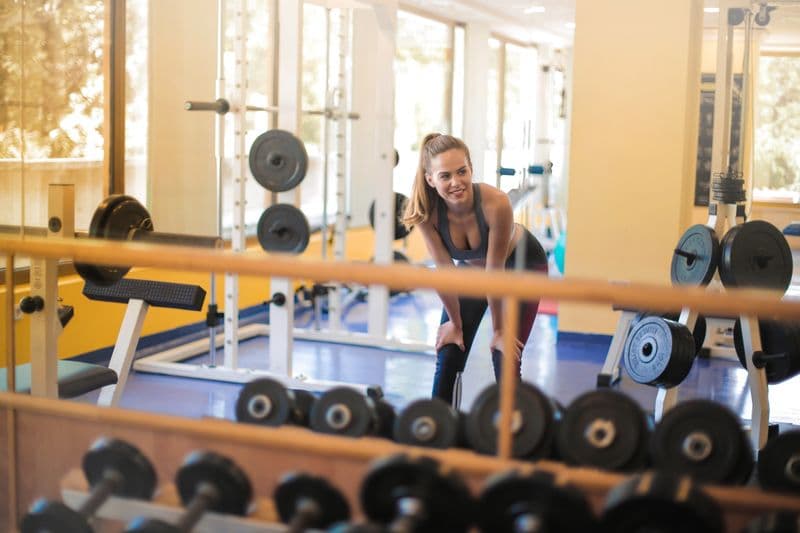
Wait 24 hours before exercising after Botox. Most aesthetic practitioners give a 24–48 hour window, and the science behind it is straightforward: exercise elevates heart rate and blood pressure, which increases blood flow throughout the body — including the freshly injected facial muscles. In the hours immediately after injection, Botox has not yet fully bound to the neuromuscular junction it was placed near. Elevated blood flow during this window can carry the toxin further than intended, causing effects in muscles adjacent to the target.
This guide explains exactly why the restriction exists, what the real risk looks like, which exercises are safer sooner, and when you can go back to full training without concern.
The Biology Behind the Exercise Restriction
Understanding why exercise matters after Botox requires understanding how the toxin works.
Botulinum toxin type A (the active ingredient in Botox, Dysport, Xeomin, and similar products) is injected in extremely small volumes (0.05–0.1 mL per point) directly into or adjacent to specific facial muscles. After injection, the toxin undergoes a multi-step process before it produces the paralytic effect:
- Diffusion phase (minutes to hours): The toxin disperses from the injection point through surrounding tissue by passive diffusion. During this phase, it is mobile — it can be carried by fluid currents, pressure gradients, or gravity.
- Receptor binding (hours to days): The heavy chain of the toxin molecule binds to specific receptors (SV2 and synaptotagmin) on the presynaptic membrane of motor neurons at the neuromuscular junction.
- Internalization and action (days): Once bound, the toxin is internalized into the nerve terminal, where the light chain cleaves SNAP-25, preventing acetylcholine release and blocking neuromuscular transmission.
The exercise restriction is relevant only during phase 1 — the diffusion phase, before binding is complete. During this window, increased blood flow accelerates diffusion and can carry the toxin laterally into adjacent muscle tissue.
How long does phase 1 last? The research is limited, but clinical consensus is that meaningful binding occurs within 2–4 hours and is largely complete within 24 hours. This is why the 24-hour restriction is the most common recommendation: it covers the entire diffusion phase with a safety margin.
The Real Risks of Early Exercise
Botox migration to unintended muscles
The most clinically significant consequence of exercise-induced migration is eyelid ptosis — drooping of the upper eyelid. This occurs when Botox injected into the frontalis (forehead) or corrugator (glabella) muscles migrates inferiorly into the levator palpebrae superioris, the muscle that elevates the eyelid.
Ptosis typically appears 2–7 days after injection, persists for 2–8 weeks, and is usually partial (not complete closure). It can be treated with prescription apraclonidine eye drops, which stimulate Müller's muscle to partially compensate, but the most reliable treatment is time.
The incidence of ptosis from Botox is low overall (approximately 1–5% of forehead and glabella treatments), and most cases are not attributable to exercise alone — injector technique is the primary variable. However, exercise in the first few hours is a modifiable risk factor that costs nothing to avoid.
Worsened bruising and swelling
Botox injections occasionally cause bruising (pinpoint haematomas at injection sites) and localized swelling. Exercise in the first few hours after treatment — particularly high-intensity exercise — elevates blood pressure and heart rate, increasing bleeding from partially sealed injection sites and worsening swelling. This does not affect the Botox efficacy directly, but it extends the cosmetic recovery period.
Asymmetrical results
If Botox migrates unevenly in one area due to exercise-related blood flow asymmetries (perhaps you exercise a specific muscle group on one side, or the injection sites on one side receive more mechanical movement during the session), the results may be asymmetrical. This is difficult to prove in individual cases but represents a plausible mechanism for uneven outcomes.
Exercise Safety by Type and Timeline
Not all exercise carries equal risk. Here's a practical breakdown:
Safe within 1–2 hours post-injection
- Gentle walking at a conversational pace on flat terrain
- Light stretching (standing, no inversions, no significant forward bending)
- Low-intensity daily activities: grocery shopping, errands, standing desk work
These activities raise heart rate modestly and maintain blood flow well within normal physiological range.
Safe after 4 hours
- Moderate walking — brisk walking, gentle hills
- Light cycling at low resistance
- Gentle swimming (avoid prolonged face-down floating which increases facial blood pressure)
- Pilates at low intensity, avoiding inversions and sustained forward flexion
Safe after 24 hours
- Running at any pace
- Cycling at normal intensity
- Weight training at light to moderate loads
- Standard yoga including most poses (inversions acceptable after 24 hours for most practitioners, though conservative providers recommend 48 hours)
- Group fitness classes (spinning, aerobics, HIIT) at moderate intensity
Wait 48 hours for
- High-intensity interval training (HIIT)
- Heavy weight training (near-maximal loads, significant Valsalva manoeuvre)
- Hot yoga (Bikram, heated vinyasa) — the heat adds vasodilation risk on top of exercise risk
- Contact sports
- Martial arts
- Any exercise that involves repeated facial expressions (laughing-heavy group classes, singing while exercising)
The special case of face-down positions
Positions that place the head below the heart — inversions in yoga, lying face-down on a bench for chest press, downward dog — increase intracranial and intrafacial blood pressure. The clinical relevance is modest, but most providers recommend avoiding these specifically for 4 hours, even if general light exercise is permissible.
What About Hot Yoga, Saunas, and Steam Rooms?
These deserve separate treatment because they add a heat component to the exercise restriction.
Heat causes vasodilation — blood vessels widen, increasing blood flow to all tissues including the face. In the first 24 hours post-injection, this elevated blood flow extends the diffusion phase of Botox and increases migration risk beyond what exercise alone produces.
The combined effect of heat + elevated heart rate in hot yoga is why providers are more cautious about this specific activity than other forms of exercise. 48–72 hours is a common recommendation for hot yoga, saunas, and steam rooms — compared to 24 hours for standard exercise.
Saunas in particular can bring skin temperature to 40–45°C, which represents a significant vasodilatory stimulus on top of any exercise effect.
Does Exercise Affect Long-Term Botox Results?
There is persistent concern among patients — particularly athletes and frequent exercisers — that regular intense exercise causes Botox to metabolize faster, producing shorter-lasting results.
The evidence on this is mixed. A few observational studies have suggested that patients who exercise regularly (particularly high-volume aerobic exercise) may have slightly shorter Botox duration. The proposed mechanism is increased metabolic rate and lymphatic clearance. However, the effect size appears to be modest — perhaps 2–4 weeks shorter duration in extreme cases — and is not consistently reproduced across studies.
The practical implication: if you are a high-volume exerciser and find your Botox fades faster than average, this is a plausible contributing factor. Discuss treatment frequency with your provider, and ensure you are following the 24–48 hour post-injection restriction for each session.
Practical Scheduling Tips
Don't schedule injections on workout days
The simplest way to handle the exercise restriction is to schedule Botox appointments on rest days. If your training schedule has a fixed structure (Monday/Wednesday/Friday, for example), book Botox on a Tuesday or Thursday.
Morning appointments allow same-evening rest
If you train in the evenings, a morning Botox appointment gives you a natural 8–12 hours of rest before your next potential session. Most providers consider this sufficient for light evening exercise (an evening walk or gentle yoga), though a full training session is best postponed to the following morning.
Tell your injector about your exercise schedule
If you train competitively or are preparing for an event, your injector should know. Some high-volume athletes prefer to time Botox around their training cycles rather than interrupting peak training weeks with a 24–48 hour restriction.
The Restriction in Context: What Actually Risks Your Results
To put the exercise restriction in perspective, it is worth noting that the things that most reliably affect Botox results are:
- Injector skill and technique — by far the dominant variable
- Individual variation in toxin response — metabolism, antibody formation, muscle mass
- Injection depth and volume — clinical decisions made during treatment
- Rubbing and massaging the treated area (especially in the first 4 hours) — potentially more impactful than exercise
- Exercise in the first 24 hours — a modifiable but moderate risk factor
The 24-hour exercise restriction is sensible and low-cost to follow. But if you inadvertently went to the gym three hours after your Botox appointment, the most likely outcome is that nothing bad happened. The restriction is precautionary — it is not the difference between results and no results.
For practitioners: exercise-related questions are among the top aftercare queries from Botox patients, particularly among active, fitness-focused clients. A printed aftercare sheet that addresses exercise timing specifically — with clear timeframes for walking, yoga, and gym — saves time in follow-up calls and sets patients up to make good decisions without having to call the clinic. Related guides: Botox swelling and recovery timeline · Botox forehead vs glabella · Botox lip flip aftercare
AftercareGen generates professional Botox aftercare documents that include exercise guidance, alcohol restrictions, and the full post-injection timeline.
Stop photocopying aftercare sheets
Generate Botox aftercare instructions branded with your clinic name in under 60 seconds. 3 free sheets per day — no credit card.
Generate your first sheet freeGet the free aftercare template pack
Generators for all 13 aesthetic procedures plus practical guides on running aftercare in your clinic. Sent once — no spam, ever.
Frequently asked questions
About the author
Dr. Megan Cole, RN, BSN
Aesthetic Nurse Practitioner
Registered Nurse with 12+ years in medical aesthetics. Certified injector (AAFE) specializing in neurotoxins and soft-tissue fillers. Clinical educator for aesthetic nursing programs.
View profile