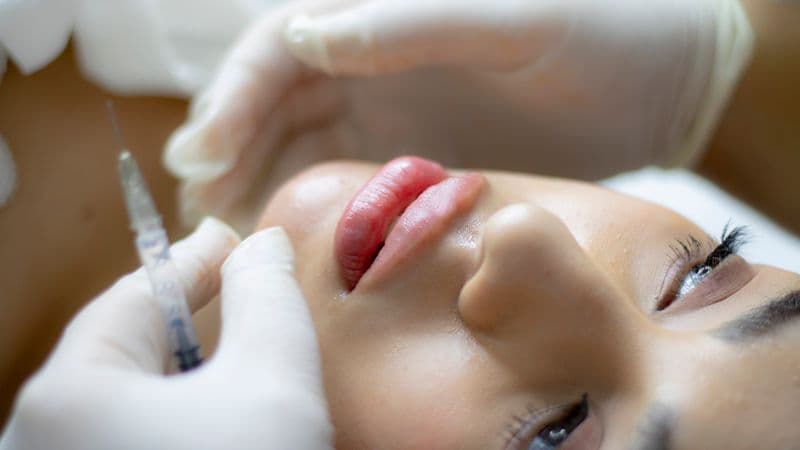
The Botox lip flip delivers a subtle but distinct result — the upper lip rolls outward, appearing fuller and more defined without adding filler volume — using just 4–6 units of botulinum toxin injected into the orbicularis oris muscle along the upper lip border.
Recovery is genuinely minimal: no swelling comparable to lip filler, no significant bruising in most patients, and no makeup restriction beyond the standard 4-hour post-injection window. The aftercare is simpler than lip filler — but it still requires attention in the first hours, and the result window of 6–8 weeks means patients need to understand the schedule to manage their expectations.
What the Lip Flip Does (and Doesn't Do)
Before addressing aftercare, the clinical mechanism matters — because it directly shapes what the recovery looks like.
The orbicularis oris is a circular muscle that surrounds the mouth and controls lip movement. Its upper portion, just above the vermilion border of the upper lip, acts to roll the lip inward (the mechanism of lip pursing). When Botox is injected into this portion of the muscle — typically at 2–4 points along the philtrum and Cupid's bow area — the partial paralysis of the muscle fiber causes the lip to relax outward rather than curling inward.
The result: the upper lip appears to "flip" outward, increasing the visible pink show of the upper lip without adding any volume. The lip is the same size; it simply shows more of its vermilion surface.
What the lip flip cannot do:
- Add volume (it does not address thin lips)
- Lift the corners of the mouth (different injection points target this)
- Create the sharp Cupid's bow definition that filler can achieve
- Last as long as filler (6–8 weeks vs. 6–12 months)
What the lip flip does well:
- Enhance the upper lip naturally, without swelling or significant recovery
- Complement existing lip filler by maximizing the visible surface area
- Correct a "gummy smile" where the upper lip elevates excessively (a slightly different injection technique addresses this)
- Provide a low-cost, low-risk entry point for patients considering lip filler who want to try enhancement first
The Recovery Timeline
Immediately after (0–30 minutes)
You will have small injection bumps at the treatment sites — 2–4 points along the upper lip border. These are identical to any Botox injection bumps and resolve within 30–60 minutes. The area may feel slightly tender or numb.
No bruising is visible immediately. If a small vessel was disrupted during injection, bruising may appear within 30 minutes to a few hours.
Do: Stay upright. Apply a cold compress (wrapped in cloth) to the lip area if you experience discomfort. Eat and drink normally — the lip flip does not restrict eating or drinking the way post-lip-filler protocols do for hot foods and spicy items.
Do not: Touch, press, rub, or massage the injection sites. Apply makeup to the upper lip area. Exercise vigorously.
Hours 1–4: The critical non-touch window
This is the same window that applies to all Botox injections — the period during which the toxin is diffusing from the injection point into the target muscle tissue. During this phase, pressure or manipulation at the injection site can theoretically cause migration to adjacent muscle tissue.
For the lip flip, the relevant adjacent muscles are the levator labii superioris (which elevates the upper lip) and the procerus (at the base of the nose). Migration to these areas produces unintended effects — asymmetry, drooping of the nose tip, or an asymmetrical smile.
The rules for hours 1–4:
- Stay upright — no lying face-down
- Do not touch, press, or massage the upper lip
- No vigorous exercise (gentle walking is fine)
- No facial massage, facial treatments, or other injections near the mouth
- Avoid alcohol (vasodilator — worsens any bruising)
After 4 hours, the toxin has diffused into the target tissue and the migration risk drops substantially.
Hours 4–24
After 4 hours, you can resume most normal activities. Apply makeup to the lips if desired. Eat and drink normally. Light exercise is appropriate.
The lip flip has not taken effect yet — the neurotoxin requires 3–5 days to begin showing results and up to 14 days for the full effect. Do not assess the result during this window.
Continue to avoid for 24 hours:
- Vigorous exercise (HIIT, weight training, hot yoga)
- Saunas and steam rooms
- Excessive heat to the face
Days 3–5: Early effect
You may begin to notice the lip relaxing outward — the first sign that the treatment is working. The upper lip may feel slightly different when you purse your lips, drink through a straw, or enunciate certain consonants. This functional change is expected and temporary.
Some patients at this stage notice asymmetry — one side of the upper lip showing the effect before the other. This typically resolves as the full effect develops by day 14.
Days 7–14: Full effect
The complete lip flip result is visible at 10–14 days. Assess your result at this point:
- Is the upper lip showing more vermilion (pink show) than before? This is the intended effect.
- Is there asymmetry? Minor asymmetry often resolves through day 14; persistent significant asymmetry at day 14 warrants a provider review.
- Is the effect stronger or subtler than expected? The number of units (4–6) determines the degree of flip. If subtler than desired, a touch-up with 1–2 additional units is possible at 2 weeks.
Weeks 6–8: Effect fades
The lip flip begins to wear off as the neurotoxin is metabolized. The upper lip gradually returns to its pre-treatment position. Patients who want to maintain the effect book their next appointment at 6–8 weeks — not the 12–16 weeks typical of forehead Botox.
Lip Flip vs. Lip Filler: Which Aftercare Is More Restrictive?
One of the most common questions from patients considering the lip flip as an alternative to filler is whether the aftercare is easier. It is — substantially:
| Aftercare element | Botox Lip Flip | Lip Filler |
|---|---|---|
| Non-touch window | 4 hours | 4–6 hours |
| No makeup | 4 hours | 24 hours |
| No exercise | 24 hours | 48 hours |
| No hot yoga/sauna | 24 hours | 48–72 hours |
| No spicy/hot food | None | 24–48 hours |
| No kissing | None | 48 hours |
| Swelling to manage | Minimal (injection bumps only) | Significant (peaks 24–48 hrs) |
| Bruising risk | Low | Moderate (higher vascularity) |
| Follow-up timing | Day 14 to assess | Day 14 to assess |
| Duration | 6–8 weeks | 6–12 months |
The lip flip wins on convenience of recovery. The tradeoff is shorter duration and a ceiling on how much enhancement it can achieve.
Functional Changes to Expect While the Lip Flip Is Active
Because the lip flip partially relaxes the orbicularis oris, you may notice subtle changes in how your lips function while the treatment is active:
Drinking through a straw: Some patients find this slightly more difficult, as the pursing required to create suction engages the orbicularis oris. Most adapt quickly or switch to open-mouth drinking.
Whistling: Requires forceful lip pursing — this will be more difficult while the lip flip is active. If whistling matters to you, this is worth knowing before your appointment.
Certain consonants: Sounds that require tight lip closure or pursing (B, P, M, O, U sounds) may feel slightly different. Most patients adapt within days and note no observable speech change to others.
Enunciation at high speed: Some patients who speak rapidly for professional reasons (public speakers, actors) notice subtle changes. Most find the effect minimal and temporary.
Eating: Large bites that require wide lip movement are generally fine. Very small, precise lip movements (e.g., eating small sushi pieces without dripping) may require slight adaptation.
These functional changes are proportional to the dose — 4 units produces more subtle effects than 6 units. They all resolve as the Botox wears off.
Combining the Lip Flip With Lip Filler
Many patients use the lip flip as a complement to lip filler rather than an alternative. The combination addresses different aspects of lip appearance:
- Lip filler adds volume, definition, and corrects thin lips
- Lip flip maximizes the visible surface area of the upper lip and softens the border
The sequencing matters: lip filler should be placed first and allowed to fully integrate (2 weeks) before the lip flip is added. Injecting Botox and filler in the same session near the same area is possible but requires careful technique to avoid the Botox affecting the filler distribution.
If you have existing lip filler and want to add a lip flip, a gap of at least 2 weeks from the last filler appointment is advisable.
When to Contact Your Provider
Normal: Injection bumps resolving in 30–60 minutes, mild tenderness, no immediate lip effect, gradual relaxation of upper lip over days 3–14, slight functional changes with straws or certain sounds.
Contact your provider if:
- Significant bruising that spreads beyond the lip area after 48 hours
- Asymmetry persisting past day 14
- Effect is significantly stronger than expected — difficulty closing the mouth or controlling the lip
- Any vision changes after facial Botox (extremely rare but warrants immediate contact)
- Infection signs at injection sites: warmth, swelling, pus after day 3
Related guides: Botox swelling and recovery timeline · how long after Botox can you exercise · lip filler vs lip flip: makeup aftercare
AftercareGen generates professional, clinic-branded Botox lip flip aftercare sheets in under a minute — including the 4-hour restriction timeline, the functional change expectations, and the 6–8 week maintenance schedule. Clear written aftercare prevents the follow-up calls that come from patients who did not expect the functional changes and assume something has gone wrong.
Stop photocopying aftercare sheets
Generate Botox aftercare instructions branded with your clinic name in under 60 seconds. 3 free sheets per day — no credit card.
Generate your first sheet freeGet the free aftercare template pack
Generators for all 13 aesthetic procedures plus practical guides on running aftercare in your clinic. Sent once — no spam, ever.
Frequently asked questions
About the author
Dr. Megan Cole, RN, BSN
Aesthetic Nurse Practitioner
Registered Nurse with 12+ years in medical aesthetics. Certified injector (AAFE) specializing in neurotoxins and soft-tissue fillers. Clinical educator for aesthetic nursing programs.
View profile