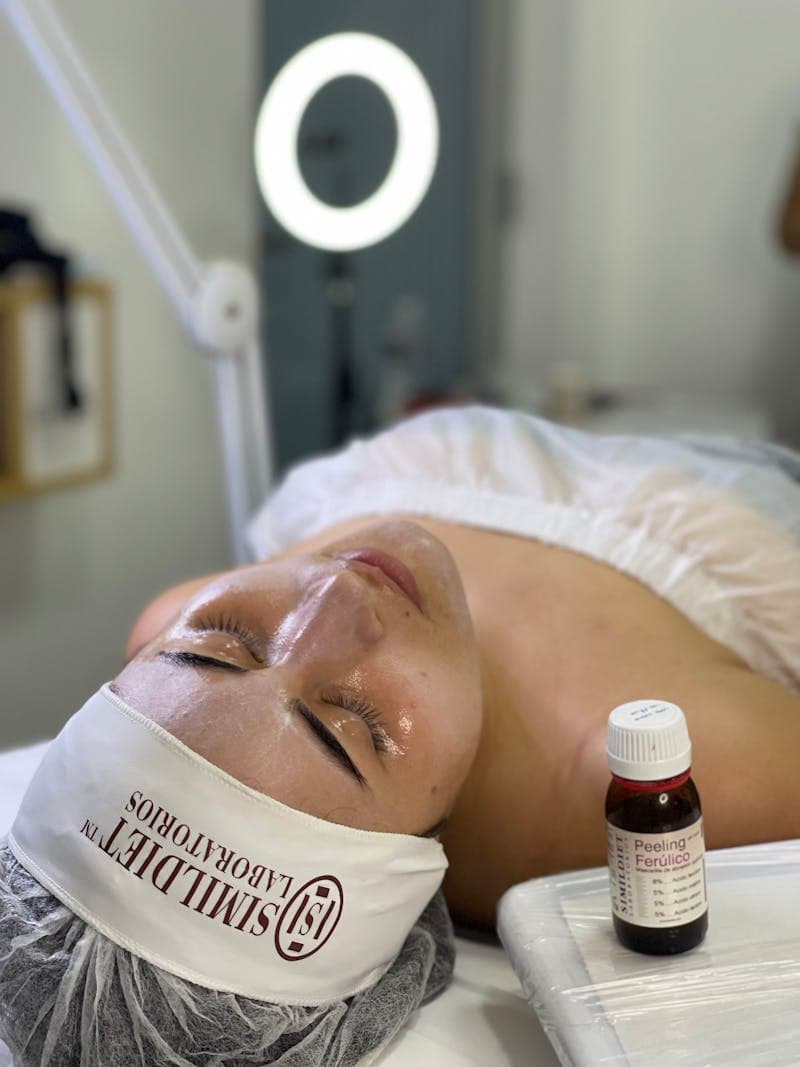
Chemical peel recovery ranges from 1 day for the lightest superficial peels to 2 weeks for deep phenol or high-concentration TCA peels. The single most important thing to understand: recovery time is determined almost entirely by the depth of the peel — and the depth determines which aftercare rules apply to you.
This guide is organized by peel depth. Find your peel type, follow the appropriate timeline, and apply the universal rules that apply to all chemical peels regardless of depth.
The Three Categories of Chemical Peels
Superficial peels (light peels)
Common agents: Low-concentration glycolic acid (20–35%), lactic acid, mandelic acid, salicylic acid (15–30%), Jessner's solution (mild formulation)
Depth: Epidermis only (stratum corneum to stratum granulosum)
Downtime: 0–3 days. Many patients return to work the same day. Peeling may not be visible at all, or presents as fine, subtle flaking.
Best for: Mild texture improvement, brightening, acne management, regular skin maintenance
Medium-depth peels
Common agents: TCA (trichloroacetic acid) 20–35%, Jessner's solution (full strength), glycolic acid 50–70% with neutralization, combination approaches
Depth: Full epidermis through papillary dermis
Downtime: 5–10 days. Visible peeling, redness, and social downtime.
Best for: Moderate sun damage, uneven pigmentation, fine lines, mild scarring
Deep peels
Common agents: Phenol (Baker-Gordon formula), high-concentration TCA (40%+), CO2 laser resurfacing (comparable depth)
Depth: Reticular dermis
Downtime: 10–21 days. Significant peeling, weeping, and recovery. Often requires medical supervision.
Best for: Significant sun damage, deep wrinkles, moderate scarring
Superficial Peel Recovery: Day by Day
Day 0 (treatment day)
Skin appears flushed or pink immediately after treatment. Some patients experience a warm, tingling sensation during the peel itself; this resolves within 30–60 minutes. For salicylic acid peels, a white frosting (the crystallized acid) may appear briefly on the skin during treatment and resolves during neutralization.
Aftercare day 0:
- Apply the soothing moisturizer or barrier cream your provider recommended
- Use SPF if going outdoors
- Avoid makeup for the rest of the day
- No exercise or heat exposure
Days 1–3: Minimal downtime
Most patients with superficial peels experience little visible change on day 1 beyond mild pinkness. Fine, subtle flaking may begin on day 2–3 — the kind that is more noticeable to you than to anyone else. Skin may feel slightly dry or tight.
Aftercare days 1–3:
- Gentle, fragrance-free cleanser (Vanicream, CeraVe Hydrating Cleanser) morning and evening
- Fragrance-free moisturizer applied 2–3 times daily
- Mineral SPF 30–50 every morning
- Resume normal activities; avoid vigorous exercise if skin is sensitive
What to avoid:
- Retinol, AHAs, BHAs, vitamin C — wait 5–7 days to reintroduce
- Exfoliants of any kind
- Hot yoga, sauna, steam
- Makeup directly over peeling areas
Day 5+: Fully recovered, reintroduce actives gradually
By day 5, most superficial peel patients have fully recovered. Skin looks clearer, brighter, and more even. Reintroduce active ingredients one at a time over the following week, starting with the least aggressive (niacinamide, then vitamin C, then low-percentage AHA, then retinol last).
Medium-Depth Peel Recovery: Day by Day
Day 0 — Treatment day
Medium-depth peels, particularly TCA 25–35%, produce a visible frosting of the skin during application. This frosting (white, opaque areas) indicates the acid has penetrated to the papillary dermis — your provider controls the degree and distribution of frosting to guide peel depth.
Within hours of the treatment, the skin will appear significantly red or pink and will feel tight and uncomfortable. Some patients experience swelling, particularly around the eyes and mouth. This is expected.
Aftercare day 0:
- Apply Aquaphor or petroleum jelly generously and frequently to keep skin moist
- Cold compresses for comfort (wrapped in cloth — never ice directly on skin)
- Oral antihistamine (cetirizine or loratadine) can help with itch and swelling if recommended by your provider
- Elevate your head for the first 24 hours to reduce facial swelling
- Stay indoors
Day 1–2: Peak redness and swelling
The face is at its most uncomfortable during this window. Skin appears deeply red, may feel very tight, and swelling (particularly around the eyes) can be significant. The surface may begin to darken slightly as the outermost layer of dead cells starts to contract.
Aftercare:
- Cleanse very gently with lukewarm water only — no cleansers until day 3
- Apply Aquaphor or prescribed ointment generously, 4–6 times daily or whenever skin feels tight and dry
- Do not touch your face unless applying ointment with clean hands
- No makeup, no actives, no sun exposure
- Take paracetamol for discomfort; avoid ibuprofen and aspirin (blood thinners)
Days 3–5: Peeling begins
This is the most dramatic phase. The outer layers of skin begin to visibly peel and shed. Peeling typically starts at the chin, nose, and areas of highest movement (around the mouth), then progresses to cheeks and forehead.
Critical rule: Do not peel, pull, or scratch the skin. Let it shed naturally. Premature removal of peeling skin exposes raw, unhealed dermis beneath — increasing infection risk, extending recovery, and potentially causing scarring or PIH.
The skin underneath the peeling areas appears pink, fresh, and more sensitive. This is new, healing epidermis.
Aftercare:
- Continue generous Aquaphor application — keep skin moist at all times
- Soaking compresses (cool, clean water) can help soften stubborn areas
- Gently pat dry; never rub
- Begin using a gentle fragrance-free cleanser if your provider has cleared it
- Take antiviral medication if prescribed (some providers prescribe prophylactic antivirals for deep and medium peels to prevent herpes simplex reactivation)
Days 5–7: Active shedding, most dramatic appearance
This window shows the most visible peeling. Patients who have not seen this process before are often alarmed. Skin may hang in visible flaps, particularly around the jaw and neck. The areas that have fully shed show bright pink, sensitive new skin.
This is the expected outcome of a medium-depth peel — not a complication.
Aftercare:
- Continue the same protocol: gentle cleanse, frequent Aquaphor, no makeup over peeling areas
- Light mineral makeup can sometimes be applied to areas that have fully healed (completed shedding)
- Oral antihistamines continue to help with itch
Days 7–10: Recovery complete for most patients
By day 7–10, most medium-depth peel patients have shed the majority of damaged skin. The face appears pink (sometimes intensely so) but smooth. Most are socially presentable — pinkness can be covered with mineral foundation.
Aftercare days 7–10:
- Begin gentle reintroduction of cleanser, then plain moisturizer (no actives yet)
- Mineral SPF 50 every morning — non-negotiable
- Do not start retinol or AHAs until your provider clears you (typically 2–3 weeks post-peel)
- Can return to work and most activities; avoid vigorous exercise for 1 more week
Deep Peel Recovery: Overview
Deep phenol peels and very high-concentration TCA peels require medical supervision, cardiac monitoring during application, and dedicated post-procedure care that goes beyond what this guide can cover. Key differences from medium-depth peels:
- Weeping phase (days 1–5): The dermis is exposed and will ooze serum — this is managed with occlusive dressings prescribed by your provider
- Downtime: 2–3 weeks minimum before social exposure
- Permanent skin change: Phenol peels can permanently lighten melanin production — patients may have permanently lighter skin in treated areas
- Requires close medical follow-up: Not a home-management recovery
If you have received a deep peel, follow your provider's instructions exactly. The generalized aftercare guidelines below apply, but your specific protocol takes precedence.
Universal Rules: All Peel Depths
These five rules apply regardless of whether you had a light lunch-hour peel or a medium TCA treatment:
1. SPF 50 every single day for 4–8 weeks minimum
This is the most critical aftercare rule for chemical peels, and the most commonly neglected. UV exposure during healing triggers post-inflammatory hyperpigmentation — the exact outcome you were likely trying to treat. New skin produced by the peel is more vulnerable to UV damage than your pre-treatment skin.
Apply a broad-spectrum SPF 50 every morning. Reapply every 2 hours if outdoors. Use mineral (zinc oxide) formulas during the healing phase as they are less irritating than chemical filters.
Many practitioners recommend ongoing daily SPF indefinitely after chemical peels — the results of your treatment will last significantly longer with consistent protection.
2. Moisturize constantly in the first week
Moist healing is faster and less painful than dry healing for chemical peels. A consistently moisturized healing environment:
- Reduces tightness and pain
- Prevents cracking (which creates new wounds)
- Allows the natural shedding of dead skin without it drying out and sticking
- Supports faster re-epithelialization
Apply Aquaphor or a prescribed ointment generously and frequently — not just twice a day. Set a reminder every 2–3 hours during waking hours in the first 3–5 days.
3. Do not pick the peeling skin
This cannot be stated strongly enough: picking prematurely removes skin that is still partially attached to living tissue below it. The sensation when you pick is the tearing of new, healing cells from the dermis. This causes scarring, PIH, and infection. The temptation to peel during a medium or deep peel recovery is powerful — the skin appears to be "ready" — but it is not.
4. No active ingredients until healed
During healing, the skin barrier is compromised. Ingredients designed to penetrate and affect the skin (retinol, AHAs, vitamin C, niacinamide) penetrate far more deeply than normal — through compromised skin, they cause irritation and inflammation rather than the benefits they provide on intact skin. Wait until your provider clears you for actives.
5. Avoid heat for the first 48–72 hours
Exercise, hot showers, saunas, steam, and spicy food all cause vasodilation that worsens swelling and inflammation in the first 48–72 hours. Keep your environment cool, take cool or lukewarm showers, and rest.
Skin Type and PIH Risk
Post-inflammatory hyperpigmentation is the most common unwanted outcome of chemical peels, and risk is not equal across all skin types.
Higher PIH risk: Fitzpatrick skin types III–VI (medium to dark skin tones) Lower PIH risk: Fitzpatrick types I–II (very fair skin)
If you have a higher risk skin type, your provider should have recommended:
- A pre-treatment course of hydroquinone or kojic acid to prime melanocytes
- A more conservative peel selection (superficial over medium-depth)
- Strict post-treatment SPF and activity restrictions
If you have medium to dark skin and your provider did not discuss PIH risk with you before a medium or deep peel — this is worth raising in your post-treatment consultation.
Products to Avoid After a Chemical Peel
The chemical peel removes or disrupts the outer skin layer, leaving the underlying epidermis temporarily compromised. Ingredients that are safe and effective on intact skin become aggressive irritants during this recovery window.
Active ingredients to avoid until fully healed
| Ingredient | Category | Why to avoid |
|---|---|---|
| Retinol / tretinoin / retinoids | Vitamin A derivatives | Accelerate cell turnover — actively disrupt healing |
| Glycolic acid | AHA | Exfoliates compromised skin, causes irritation and inflammation |
| Lactic acid | AHA | Gentler than glycolic but still contraindicated during healing |
| Salicylic acid | BHA | Lipid-soluble; penetrates compromised barrier more deeply than normal |
| Ascorbic acid (vitamin C) | Antioxidant | Low-pH formulas irritate healing skin |
| Benzoyl peroxide | Acne treatment | Oxidative ingredient that inflames compromised skin |
| Physical scrubs, brushes, loofahs | Mechanical exfoliants | Physically removes healing skin |
| AHA/BHA combination products | Exfoliants | Never use while skin is actively healing |
Products appropriate during recovery
- Plain fragrance-free moisturizer: Aquaphor Healing Ointment, CeraVe Healing Ointment, Vanicream Moisturizing Skin Cream, or Vaseline (for deep peels)
- Gentle fragrance-free cleanser: Vanicream Gentle Facial Cleanser, CeraVe Hydrating Cleanser, La Roche-Posay Toleriane Hydrating Gentle Cleanser
- Mineral sunscreen (SPF 50): Zinc oxide or titanium dioxide formulas only — chemical filters can irritate healing skin
- Prescribed topical medications: Hydrocortisone (if your provider recommended), antiviral medication (if prescribed for medium/deep peels)
When to reintroduce actives
Reintroduce one at a time, starting with the least aggressive:
- Niacinamide at 2–5% — typically safe after full peeling has completed
- Vitamin C at low concentration (5–10%, stable formula) — once barrier is restored
- Low-percentage AHA (glycolic 5%) — after your provider clears you
- Retinol — last to reintroduce, 1–6 weeks after peel depending on depth
Practitioner Aftercare Checklist: Chemical Peel
If you perform chemical peels, providing patients with a standardized aftercare checklist specific to their peel depth at the point of care dramatically reduces follow-up calls and adverse outcomes.
Immediately post-treatment (in clinic)
- Apply soothing post-peel product per your protocol (barrier repair serum, plain moisturizer, or petroleum jelly)
- Apply cool compress for comfort (wrapped, not ice directly)
- Confirm patient has taken oral antihistamine if prescribed
- Confirm prescription antiviral has been dispensed if prescribed (medium/deep peels)
- Hand over written aftercare instructions with the specific peel type, depth, and date noted
- Apply SPF if patient is going outdoors
Instructions to communicate before discharge
- Do not pick or pull peeling skin at any stage
- Moisturize generously and frequently — moist healing is faster and more comfortable
- SPF 50 every morning beginning day 1 — reapply every 2 hours if outdoors
- Avoid sun exposure for [2 weeks superficial / 4 weeks medium / 8 weeks deep]
- Do not resume retinol, AHAs, or vitamin C until provider clears
- No vigorous exercise or saunas/steam for 48–72 hours
- No makeup until peeling has fully resolved
- Contact clinic for: blistering, infection signs, fever, herpes simplex reactivation
Post-treatment follow-up
- Schedule follow-up at [3 days superficial / 7–10 days medium / 14–21 days deep]
- Document peel type, concentration, and passes in patient record
- Note pre-existing conditions affecting healing (rosacea, eczema, immunosuppression)
- Confirm patient understanding of PIH risk (particularly for Fitzpatrick III–VI)
When to Contact Your Provider
Normal: Redness, tightness, swelling (peaking at 24–48 hours), peeling beginning days 3–5, new pink skin beneath shed areas, temporary darkening before peeling begins
Contact your provider if:
- Fever or systemic illness symptoms (could indicate infection)
- Blistering or vesicle formation (more than expected surface peeling)
- Any areas that appear infected: warm, swollen, painful with pus
- Herpes simplex reactivation (cold sore appearance near the mouth or nose) — requires antiviral treatment
- Skin that is still raw and weeping beyond day 10 for medium peels, or beyond day 21 for deep peels
- Significant PIH (darkening) appearing in the treated area in the first 4 weeks
A professional aftercare sheet given at the point of care — with your clinic name, the specific peel type performed, and a clear day-by-day timeline — sets patient expectations accurately and reduces panic calls during the peeling phase. Related guides: TCA peel aftercare day-by-day recovery · microneedling aftercare · dermaplaning aftercare tips
AftercareGen generates clinic-branded chemical peel aftercare documents in seconds, covering all peel depths.
Stop photocopying aftercare sheets
Generate Chemical Peel aftercare instructions branded with your clinic name in under 60 seconds. 3 free sheets per day — no credit card.
Generate your first sheet freeGet the free aftercare template pack
Generators for all 13 aesthetic procedures plus practical guides on running aftercare in your clinic. Sent once — no spam, ever.
Frequently asked questions
About the author
Dr. Megan Cole, RN, BSN
Aesthetic Nurse Practitioner
Registered Nurse with 12+ years in medical aesthetics. Certified injector (AAFE) specializing in neurotoxins and soft-tissue fillers. Clinical educator for aesthetic nursing programs.
View profile