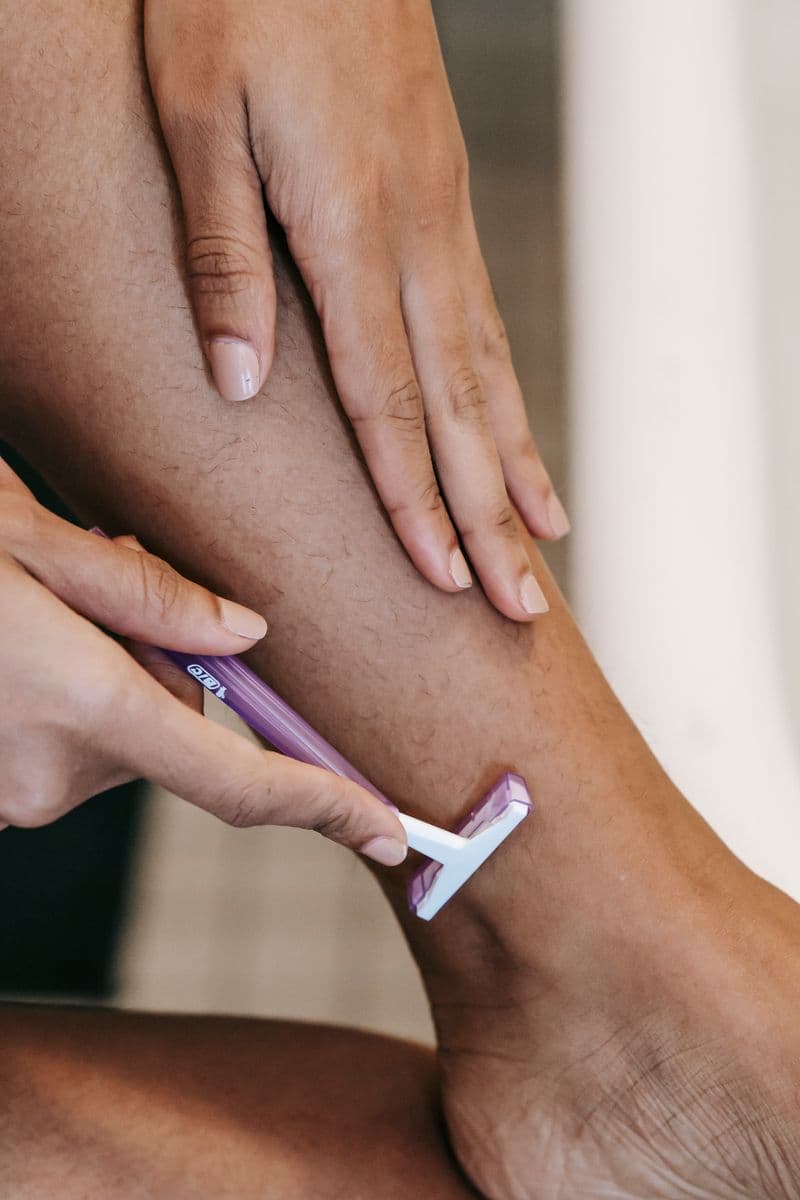
Dermaplaning is one of the lowest-downtime aesthetic treatments available — a medical-grade scalpel removes the outermost layer of dead skin cells and vellus hair (peach fuzz), leaving skin noticeably smoother, brighter, and more receptive to skincare. Most patients return to work the same day.
But "minimal downtime" does not mean "no aftercare." The treatment removes the stratum corneum — the skin's primary physical barrier — leaving the layers beneath more exposed than usual for 24–48 hours. How you treat that window determines whether you get the glowing result you paid for, or a breakout.
What Dermaplaning Does (and Why Aftercare Follows From It)
A practitioner uses a sterile, surgical-grade 10R blade held at a 45-degree angle to the skin and draws it across the face in short, feathering strokes. This removes:
- Dead stratum corneum cells — the outermost layer of the epidermis, typically 15–20 cell layers deep
- Vellus hair (peach fuzz) — the fine, unpigmented facial hair that traps dead skin, sebum, and product residue
What it does not remove: living epidermal cells, the dermis, or any hair follicle structure.
The immediate results are visible: skin appears brighter (dead cell accumulation was dulling it), smoother to the touch, and primed for deeper absorption of topical products. Foundation applies more evenly without the texture of the vellus hair beneath it.
The aftercare implications follow directly from the biology: the stratum corneum that was removed was your skin's primary UV filter and barrier against irritants. For 24–48 hours while it regenerates, the skin beneath is more vulnerable to UV damage, more permeable to both beneficial and harmful cosmetic ingredients, and more reactive to mechanical stress.
The 8 Aftercare Tips
1. SPF immediately — and daily for at least 4 weeks
Sunscreen is the most important aftercare step after dermaplaning, and it needs to start the same day of the treatment if you will be outdoors.
The stratum corneum contains melanin granules that act as a physical UV filter. With it removed, the skin beneath has meaningfully reduced UV protection for 24–48 hours. In this window, even modest sun exposure can trigger redness, hyperpigmentation, or accelerated aging in the freshly exposed skin.
Apply a broad-spectrum SPF 50 before leaving the clinic. Use mineral formulas (zinc oxide or titanium dioxide) in the first 48 hours — they sit on the skin's surface rather than penetrating, which is preferable on freshly-exfoliated skin. Reapply every 2 hours if outdoors.
After the first 48 hours, continue daily SPF indefinitely — this protects the new skin cells and extends the results of the treatment.
2. Keep it gentle for 24 hours
For the first 24 hours, your skincare routine should be reduced to its most basic, gentle form:
- Cleanser: Lukewarm water + a plain, fragrance-free, non-exfoliating cleanser (Vanicream, CeraVe Hydrating Cleanser)
- Moisturizer: A fragrance-free, non-comedogenic moisturizer (CeraVe Moisturizing Cream, Cetaphil)
- SPF: Mineral SPF 50
- Nothing else
This is not the time to use your most sophisticated skincare. A freshly dermaplaned face with barrier disruption is reactive — keep variables low.
3. Hold the actives for 48–72 hours
The most common dermaplaning aftercare mistake is applying active ingredients too soon. The stratum corneum normally acts as a rate-limiting barrier that controls how deeply ingredients penetrate. With it removed, actives penetrate significantly deeper and faster than they would on intact skin.
What this means in practice:
- Retinol / tretinoin: Penetrates into the dermis instead of acting at the epidermal level — causing intense irritation, redness, and peeling on skin that is already sensitized. Wait 48–72 hours, then resume at your normal concentration.
- AHAs (glycolic, lactic, mandelic): Double-exfoliating freshly dermaplaned skin causes over-exfoliation — a damaged, inflamed barrier that takes weeks to recover. Wait 48–72 hours.
- Vitamin C (ascorbic acid): At high concentrations (15–20%), can cause stinging and irritation on de-cornified skin. Wait 24–48 hours; ascorbyl glucoside (gentler derivative) can be reintroduced sooner.
- Benzoyl peroxide: Strong drying agent; very irritating on freshly exposed skin. Wait 48–72 hours.
- Niacinamide: Generally well-tolerated at moderate concentrations (2–5%) — can be used from day 2 for most patients.
4. Avoid heat for 24–48 hours
Heat causes vasodilation — widening of blood vessels, increasing blood flow to the skin. On freshly dermaplaned skin, this produces more redness, more sensitivity, and more reactive responses to any topicals applied during the heated state.
Practical heat avoidance for 24–48 hours:
- Lukewarm showers, not hot
- No saunas, steam rooms, facial steamers
- No hot yoga or high-intensity exercise
- Avoid spicy food that triggers facial flushing
- Stay out of direct sun (also a heat source)
5. Delay makeup by at least 2 hours (24 hours is better)
The pores that were cleared of dead skin and peach fuzz during dermaplaning are more open than usual immediately after treatment. Applying occlusive liquid foundation into these open pores can clog them, leading to comedones (closed whiteheads) in the days following treatment.
Timeline:
- 0–2 hours: Nothing on the face
- 2–6 hours: Light mineral powder or tinted SPF only — no liquid foundation
- 24 hours: Return to normal makeup routine, applied gently with clean brushes
When you do return to makeup, apply it with cleaned brushes or fresh sponges — not tools that have been sitting out accumulating bacteria.
6. Do not exfoliate for 5–7 days
Dermaplaning is a form of mechanical exfoliation — a significant one. Applying any additional exfoliation within the first week creates over-exfoliation, a condition where the skin barrier is so disrupted it cannot maintain moisture or resist environmental insults. Symptoms include persistent redness, sensitivity to normally-tolerated products, tightness, and a paradoxically rough, uneven texture.
Avoid for 5–7 days:
- Physical scrubs (sugar, walnut, silicone brushes)
- Enzyme masks with exfoliating action
- Chemical exfoliants (AHAs, BHAs — see above)
- At-home dermaplaning tools
7. Expect and manage the "regrowth" phase
Between appointments, the vellus hair removed during dermaplaning will regrow. As it does, the blunt-cut hair tip gives the appearance of stubbly regrowth — which many first-time patients misinterpret as the hair growing back coarser.
It is not coarser. The follicle produces exactly the same hair as before. The visual difference is that the original fine, tapered tip of the hair has been cut away, leaving a blunt tip that is the same diameter as the rest of the shaft — which feels and appears more prominent until the hair grows long enough that the tip-to-shaft ratio normalizes.
If the regrowth texture bothers you, scheduling dermaplaning every 4–5 weeks (timed to when regrowth reaches peak visual prominence) is the most effective solution.
8. Moisturize generously — twice daily
The stratum corneum plays a critical role in trans-epidermal water retention. With it removed, the skin loses water more rapidly than usual (a phenomenon called increased transepidermal water loss, or TEWL). This produces tightness, sensitivity, and can slow the regrowth of the barrier layer.
Applying a rich, fragrance-free moisturizer morning and evening for the first 5–7 days supports barrier recovery, reduces TEWL, and keeps the skin feeling comfortable throughout the healing window.
What Not to Do After Dermaplaning
Don't self-dermaplane between appointments
At-home dermaplaning tools (disposable face razors, dermaplaning devices) are marketed as maintenance between professional treatments. In general, these are fine for patients who want to manage peach fuzz between appointments. However, using them on freshly-dermaplaned skin before full barrier recovery (within 2–3 weeks of a professional treatment) over-exfoliates the skin and defeats the purpose.
Wait at least 3 weeks before any at-home dermaplaning after a professional treatment.
Don't book back-to-back resurfacing treatments
Dermaplaning is often offered as an add-on to chemical peels or microneedling. When combined in a single session by a trained practitioner, this can be appropriate — the dermaplaning creates an optimized canvas for the peel or serum to penetrate. However, booking separate dermaplaning and chemical peel appointments within 2–3 weeks of each other (without practitioner guidance) stacks exfoliation beyond what the barrier can recover from.
If you want to combine treatments, do so in the same session under professional guidance — not in back-to-back separate appointments.
Don't assume you're a candidate if you have active acne
This bears repeating: inflammatory acne (active papules, pustules, cysts) is a contraindication for dermaplaning. Running a blade across active acne lesions ruptures them, spreads Cutibacterium acnes (the bacteria implicated in acne) across the face, and reliably worsens breakouts.
If you have mild comedonal acne (blackheads and closed comedones without inflammation), dermaplaning can actually be beneficial — it physically extracts comedone contents and prevents new formation. But the distinction matters. Discuss your current acne status with your practitioner at every appointment, not just the first.
The Dermaplaning Aftercare Routine: Day by Day
| Day | AM | PM | Notes |
|---|---|---|---|
| Day 0 (same day) | Gentle cleanser · Mineral SPF 50 | Gentle cleanser · Fragrance-free moisturizer | No makeup 2–6 hrs; mineral only after 6 hrs |
| Day 1 | Cleanser · Moisturizer · Mineral SPF | Cleanser · Moisturizer | No actives; no heat; no vigorous exercise |
| Day 2 | Cleanser · Niacinamide · Moisturizer · SPF | Cleanser · Niacinamide · Moisturizer | Can reintroduce light actives if tolerating well |
| Day 3–5 | Normal routine minus retinol/AHA | Cleanser · Moisturizer (or gentle Vit C) | Begin reintroducing actives one at a time |
| Day 5–7 | Full normal routine | Retinol at normal concentration | Full routine restored; continue SPF daily |
Dermaplaning is a treatment that rewards good aftercare disproportionately. The results without proper aftercare — SPF skipped, retinol applied day one, heavy foundation the same afternoon — are often disappointing. The same treatment with proper aftercare produces noticeably brighter, smoother skin that lasts close to the full 4-week cycle. Related guides: HydraFacial aftercare tips · chemical peel aftercare recovery timeline · microneedling aftercare do's and don'ts
AftercareGen generates professional, clinic-branded dermaplaning aftercare sheets that your patients can reference at home — covering the SPF requirement, the active ingredient timeline, and the peach fuzz regrowth facts that prevent unnecessary follow-up calls.
Stop photocopying aftercare sheets
Generate Dermaplaning aftercare instructions branded with your clinic name in under 60 seconds. 3 free sheets per day — no credit card.
Generate your first sheet freeGet the free aftercare template pack
Generators for all 13 aesthetic procedures plus practical guides on running aftercare in your clinic. Sent once — no spam, ever.
Frequently asked questions
About the author
Dr. Megan Cole, RN, BSN
Aesthetic Nurse Practitioner
Registered Nurse with 12+ years in medical aesthetics. Certified injector (AAFE) specializing in neurotoxins and soft-tissue fillers. Clinical educator for aesthetic nursing programs.
View profile