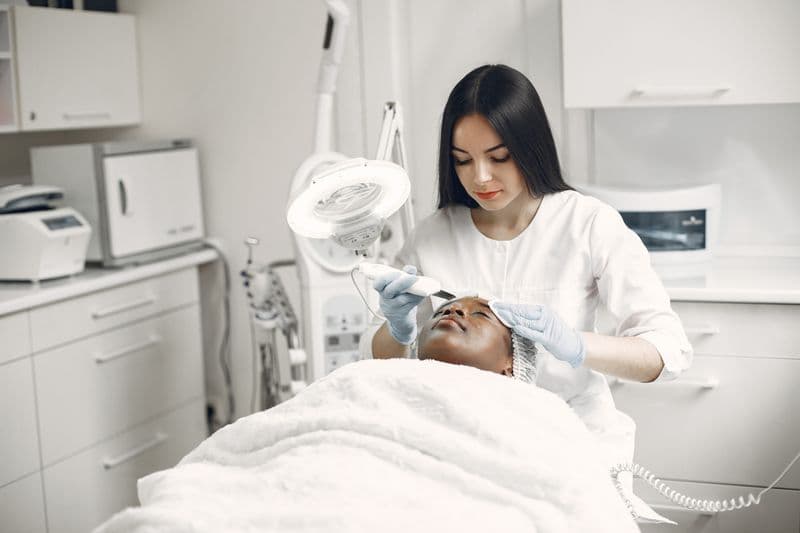
PRP microneedling costs 2–3x more than standard microneedling. The question is whether it produces 2–3x better results — and the honest answer is: it depends entirely on what you are trying to treat and how much collagen response you need.
For mild texture improvement and maintenance, standard microneedling is excellent and the PRP premium is not justified. For moderate to severe acne scarring, significant skin laxity, or conditions requiring maximal collagen induction, PRP produces a meaningfully stronger outcome that may justify the cost. This guide explains why, with the biology and the clinical evidence behind each claim.
What Both Treatments Share
Standard microneedling and PRP microneedling are built on the same foundation: controlled micro-injury to the skin triggers the wound healing cascade, which produces new collagen and elastin. Both treatments use the same type of device (automated microneedling pen or dermaroller), the same needle depth range (0.5–2.5mm depending on indication), and the same general post-treatment recovery trajectory.
The core benefits — improved skin texture, reduced fine lines, decreased pore appearance, and progressive skin quality improvement with serial treatments — are achievable with either modality.
Where they diverge is the amplitude of the collagen response and the speed at which that response is triggered.
What PRP Adds — and Why It Matters
Platelet-rich plasma is produced by drawing a small volume of the patient's blood (typically 15–20 mL), centrifuging it to concentrate the platelet fraction, and applying or injecting the resulting plasma — which contains 5–10x the normal concentration of platelets and their associated growth factors.
The key growth factors in PRP and their roles:
| Growth factor | Function in skin repair |
|---|---|
| PDGF (Platelet-Derived Growth Factor) | Recruits fibroblasts; stimulates collagen and elastin synthesis |
| TGF-β (Transforming Growth Factor-beta) | Regulates extracellular matrix deposition; modulates scar formation |
| VEGF (Vascular Endothelial Growth Factor) | Stimulates new capillary formation; improves tissue oxygenation |
| EGF (Epidermal Growth Factor) | Accelerates keratinocyte migration; speeds re-epithelialization |
| IGF-1 (Insulin-like Growth Factor) | Fibroblast proliferation; collagen type I synthesis |
When applied topically over microneedling channels, or injected directly into the dermis, these growth factors act on the fibroblasts and other cells that standard microneedling already activated — but with far greater signal intensity. Think of standard microneedling as ringing a doorbell; PRP microneedling is ringing the doorbell and also delivering a package of instructions directly into the house.
The result is a more robust inflammatory and proliferative response, producing greater collagen deposition per treatment session.
Side-by-Side Comparison
| Factor | Standard Microneedling | PRP Microneedling |
|---|---|---|
| Mechanism | Controlled micro-injury → wound healing cascade | Micro-injury + concentrated growth factors → amplified response |
| Collagen response | Moderate | Strong to very strong |
| Downtime | 24–48 hours redness | 48–72 hours redness |
| Pain during treatment | Mild–moderate (topical numbing applied) | Mild–moderate (same, plus blood draw) |
| Sessions needed | 3–6 | 3–4 |
| Per-session cost | $200–700 | $500–1,400 |
| Best indication | Mild texture, pores, maintenance | Acne scarring, laxity, significant aging |
| Results timeline | 4–6 weeks per session, peak 3–6 months | 2–4 weeks per session (faster initial response) |
| Suitable for all skin types | Yes | Yes (Fitzpatrick I–VI) |
| Risk of PIH | Moderate | Moderate–high (deeper treatments) |
| Contraindications | Blood thinners, active acne, certain skin conditions | Same + platelet disorders, blood thinners, active infection |
When Standard Microneedling Is the Right Choice
Standard microneedling is the appropriate choice when:
The indication is mild to moderate: Fine lines, mild texture irregularity, mild pore enlargement, and general skin maintenance all respond well to standard microneedling without needing the amplified growth factor stimulus that PRP provides.
Budget is a meaningful constraint: The cost difference between standard and PRP microneedling is significant when multiplied across a series of 3–6 treatments. For mild indications, the additional spend does not produce proportionally better outcomes.
The patient is starting treatment: For first-time microneedling patients, standard microneedling establishes a baseline response and allows the patient and provider to assess skin sensitivity and recovery before adding the complexity and cost of PRP.
Maintenance is the goal: Patients who have completed a PRP series and achieved their target outcome often transition to standard microneedling for annual maintenance — the strong collagen induction phase is complete, and they need sustained activation rather than maximal stimulation.
When PRP Microneedling Is Worth the Investment
PRP microneedling is clinically differentiated — not just premium for premium's sake — in these specific scenarios:
Moderate to severe acne scarring
This is the clearest indication for PRP over standard microneedling. Atrophic acne scars (ice pick, rolling, boxcar) require significant dermal remodeling to visibly improve. Standard microneedling activates this remodeling, but the collagen response may require 6+ sessions to produce noticeable scar improvement. PRP amplifies fibroblast recruitment and collagen deposition at each session, producing faster and more significant volumization of atrophic scars — often achieving similar outcomes in 3–4 sessions rather than 6.
Skin laxity and volume loss
As skin ages, it loses collagen density and the supportive matrix that provides firmness. PRP's growth factors — particularly PDGF and VEGF — stimulate not just collagen but also new blood vessel formation, improving tissue oxygenation and the overall quality of the regenerative response. For patients with noticeable skin laxity, the PRP component provides a qualitatively different result than microneedling alone.
Hair restoration (scalp PRP)
When microneedling is performed on the scalp for hair loss (alopecia), PRP injection into the scalp simultaneously is a well-supported adjunct. The growth factors stimulate follicle growth phase and increase follicle size. This indication is distinct from facial microneedling, and the evidence specifically supports PRP for androgenetic alopecia.
Patients who want accelerated results
Standard microneedling produces results on a 4–6 week per session timeline. PRP often shows initial improvement in 2–4 weeks per session due to the faster growth factor-driven response. For patients with a defined timeline (a wedding, major event), PRP's faster response may justify the additional cost.
The Blood Draw: What to Expect
The PRP process adds a blood draw step to the appointment. This typically occurs at the start of the session:
- A nurse or phlebotomist draws 15–20 mL of blood from your arm vein — similar to a standard blood test
- The blood is placed in a centrifuge and spun for 5–10 minutes, separating platelet-rich plasma from red blood cells and platelet-poor plasma
- The PRP fraction is drawn into syringes for application or injection
The blood draw adds approximately 15–20 minutes to the appointment. Some patients experience mild light-headedness from the blood draw (more common in those who did not eat beforehand) — eat a substantial meal before your appointment.
Ensure your clinic uses FDA-cleared centrifuge systems and maintains sterile processing protocols. The PRP preparation is returned to your own body, which eliminates the risk of foreign body reaction, but the processing step must be done under sterile conditions.
Aftercare: What Changes With PRP
The aftercare protocol for PRP microneedling is largely the same as standard microneedling, with a few important differences:
Do not wash your face for 6–24 hours: With standard microneedling, 6 hours is sufficient. With PRP, the topically applied growth factors continue absorbing through the micro-channels for up to 24 hours — washing removes them before they have fully penetrated.
Redness lasts 48–72 hours instead of 24–48: The amplified inflammatory response produces more visible redness for longer. Budget an extra day of social downtime compared to standard microneedling.
Exercise restriction is 48–72 hours instead of 24–48 hours: Same reasoning — the more robust inflammatory response is more sensitive to the heat and elevated blood pressure of exercise.
SPF compliance is even more critical: The deeper treatment depth and stronger inflammatory response in PRP sessions increases PIH risk, particularly in Fitzpatrick types III–VI. SPF 50 for 30+ days is essential.
For both treatments, see our dedicated aftercare guides: microneedling aftercare and PRP microneedling aftercare.
Making the Decision: A Simple Framework
| Your situation | Recommendation |
|---|---|
| Mild texture, pores, first-time patient | Standard microneedling |
| Moderate acne scarring (some visible scars) | Start with standard; consider PRP if 3 sessions show limited improvement |
| Significant acne scarring (visible in photos) | PRP microneedling from the start |
| Skin laxity and early aging | PRP microneedling |
| Maintenance after completing a treatment series | Standard microneedling |
| Budget-constrained, mild indication | Standard microneedling — results will be good |
| Hair loss on scalp | PRP microneedling (scalp protocol) |
| Timeline pressure (event in 6 weeks) | PRP microneedling for faster initial response |
The most productive approach is an honest consultation with your provider — someone who will assess your specific indication and skin type rather than defaulting to the higher-revenue option. If you are told PRP is necessary for mild texture improvement, that is worth questioning. If you have significant scarring and are only offered standard microneedling, that is also worth questioning.
Both treatments, done well with appropriate aftercare, produce real and lasting results. The decision between them should be driven by your skin condition and goals — not by marketing.
Related guides: microneedling aftercare do's and don'ts · PRP microneedling aftercare · how often can you get microneedling
Stop photocopying aftercare sheets
Generate Microneedling aftercare instructions branded with your clinic name in under 60 seconds. 3 free sheets per day — no credit card.
Generate your first sheet freeGet the free aftercare template pack
Generators for all 13 aesthetic procedures plus practical guides on running aftercare in your clinic. Sent once — no spam, ever.
Frequently asked questions
About the author
Dr. Megan Cole, RN, BSN
Aesthetic Nurse Practitioner
Registered Nurse with 12+ years in medical aesthetics. Certified injector (AAFE) specializing in neurotoxins and soft-tissue fillers. Clinical educator for aesthetic nursing programs.
View profile