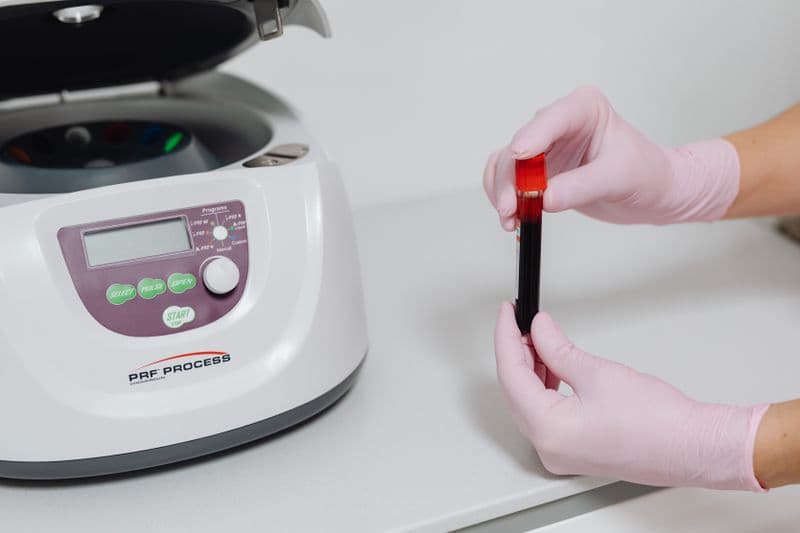
PRP microneedling aftercare is more demanding than standard microneedling — and the consequences of getting it wrong are more significant. The reason is the PRP itself: platelet-rich plasma is a concentrated solution of growth factors from your own blood that, when applied to micro-channeled skin, supercharges the healing and collagen response. That amplification works in both directions. The right aftercare accelerates the benefit. The wrong aftercare — exercise too soon, the wrong cleanser, sun exposure — amplifies the inflammatory response into post-inflammatory hyperpigmentation or infection.
The first 72 hours are the window where aftercare matters most. This guide covers them in detail, then the full recovery arc through week 6.
What Makes PRP Microneedling Different
Standard microneedling creates micro-injuries that trigger the wound healing cascade — inflammatory phase → proliferative phase (collagen synthesis) → remodeling. The results are driven by your body's natural response to that controlled injury.
PRP microneedling adds a second stimulus: concentrated growth factors applied directly into the dermis through the micro-channels. Key growth factors in PRP include:
- PDGF (Platelet-Derived Growth Factor): Recruits fibroblasts to the injury site and stimulates collagen production
- TGF-β (Transforming Growth Factor-beta): Regulates scar formation and extracellular matrix deposition
- VEGF (Vascular Endothelial Growth Factor): Stimulates new blood vessel formation, improving tissue oxygenation
- EGF (Epidermal Growth Factor): Accelerates epidermal regeneration
The clinical result is a more intense and faster collagen response compared to microneedling alone — which is why PRP microneedling is favored for more significant concerns (acne scarring, deep texture issues, volume loss) rather than routine maintenance.
The aftercare implication: the stronger inflammatory response means more redness, more sensitivity, and a slightly longer recovery window than standard microneedling. It also means the skin barrier is more compromised in the first 48 hours — making it more reactive to anything applied to it.
The Critical First 24 Hours
Do not wash your face for 6–8 hours (ideally 24 hours)
This is the most important single aftercare instruction for PRP microneedling. The PRP applied during your treatment needs time to penetrate through the micro-channels into the dermis. Washing the face — even gently — removes the PRP that has not yet absorbed, significantly reducing the growth factor dose your skin receives.
Your provider may have injected PRP directly (intradermal injection) in addition to topical application, which reduces this concern somewhat. But even with injected PRP, the topical layer provides additional benefit. Wait the full 6–8 hours minimum; 24 hours is better.
Keep hands off your face
In the first 24 hours, treat your face as a sterile field. Every touch introduces bacteria to micro-channels that are still open. Resist touching, scratching, or rubbing even if the skin feels itchy (itching is a normal part of the early healing response — it signals active cellular repair).
If you must touch your face (applying ointment, patting dry), wash your hands thoroughly first.
No makeup for 24 hours (ideally 48 hours)
Makeup applied over fresh PRP microneedling introduces pigments, preservatives, and bacteria directly into the dermis. The growth factors in the PRP are actively signaling cell migration and proliferation — the last thing you want introduced into that environment is a liquid foundation. Wait 24 hours minimum; mineral powder makeup only at 24–48 hours; full makeup resumed at day 3 once the skin surface has stabilized.
Stay cool — aggressively
Heat is the enemy of PRP microneedling recovery for two reasons: it worsens the already-elevated inflammatory response, and it activates melanocytes (pigment cells) in skin that is thermally stressed. Activated melanocytes in post-treatment skin produce excess melanin — PIH. This risk is particularly elevated in Fitzpatrick skin types III–VI.
Practical heat avoidance for 24–48 hours:
- Cool or lukewarm showers only (no hot showers)
- Avoid saunas, steam rooms, hot tubs
- Stay out of direct sun; wear a wide-brim hat if going outside
- Skip spicy food (capsaicin causes facial flushing)
- Avoid alcohol (vasodilator)
- Turn down the thermostat; sleep in a cool environment
Skip exercise for 72 hours
The 72-hour exercise restriction for PRP microneedling (versus 24–48 hours for standard microneedling) accounts for the deeper average needle penetration used in PRP treatments and the more robust inflammatory response. Exercise produces three problematic effects: elevated core temperature, sweating (bacteria onto open channels), and elevated blood pressure (increased blood flow to treated areas, worsening redness and edema).
Return to light activity (walking) on day 3 if redness has resolved. Return to full training on day 4–5.
Days 1–3: Managing the Inflammatory Phase
The skin will look and feel like a moderate to severe sunburn for the first 24–48 hours. Redness is uniform across the treated area, skin feels warm and tight, and there may be minor swelling.
Skincare protocol days 1–3:
-
Cleanse (starting 6–24 hours post-treatment): Lukewarm water + gentle, fragrance-free, sulfate-free cleanser (Vanicream, CeraVe Hydrating Cleanser, La Roche-Posay Toleriane). Pat dry with a clean towel. Never rub.
-
Moisturize: A plain, fragrance-free barrier moisturizer — CeraVe Moisturizing Cream, Aquaphor, or the post-treatment cream your provider gave you. Apply as often as the skin feels dry or tight. Moist healing reduces discomfort and supports faster barrier repair.
-
SPF: Mineral (zinc oxide or titanium dioxide) SPF 50, every morning, reapplied every 2 hours if outdoors. Chemical sunscreen filters can irritate the compromised barrier — stick to physical filters for at least the first week.
What to avoid days 1–3:
- All actives without exception: no retinol, no AHAs/BHAs, no vitamin C, no niacinamide (even niacinamide — though anti-inflammatory, it is unnecessary and adds one more variable to a sensitive skin state)
- Exfoliants of any kind
- Fragrance in any product
- Hot water
- Exercise
- Makeup (or mineral powder only after 24 hours)
Days 4–7: Barrier Rebuilding
By day 4, most patients with standard-depth PRP microneedling see dramatic improvement in redness. The skin surface looks largely healed. Fine peeling or flaking may appear — this is normal and resolves without intervention.
This is the reintroduction window for the first post-treatment actives:
- Day 3–4: Niacinamide (2–5% concentration) — anti-inflammatory, supports barrier repair
- Day 5–7: Plain hyaluronic acid serum — hydration support with no irritation risk
- Day 7: Vitamin C (start at 10–15% or use a gentler derivative) — antioxidant protection and brightening
Continue mineral SPF every day.
What to avoid days 4–7:
- Retinol: wait until day 10–14 minimum
- AHAs/BHAs: wait until day 10–14, then reintroduce at your lowest concentration
- Physical exfoliants: wait until day 14
- Chemical SPF: can transition to chemical SPF at day 7 if skin is comfortable
- Professional facial treatments: wait 2 weeks
Days 7–14: Progressive Normalization
The skin is largely recovered by day 7–10. Most patients resume their full skincare routine at this stage, with the exception of prescription-strength retinoids (wait the full 14 days, then reintroduce at the lowest dose).
The collagen remodeling process is actively underway during this window — this is where the treatment is "working," invisibly, in the dermis. UV protection is especially important during active remodeling, as UV-induced inflammation directly competes with the growth factor-driven repair signals.
Week 2 reintroductions:
- Retinol: day 10–14, start at lowest concentration (0.025–0.05%)
- AHAs: day 10–14, start at 5–8% glycolic or lactic (not your usual full-strength)
- Physical exfoliants (gentle enzyme masks, not granular scrubs): day 14
- Microdermabrasion or other resurfacing: wait 4 weeks minimum
The Post-Treatment Brightening Effect (And When It Peaks)
One of the earliest benefits of PRP microneedling that patients notice — often within the first 5–10 days — is improved skin radiance and hydration. This is not a placebo effect. The growth factors in PRP accelerate epidermal regeneration, producing new, younger skin cells faster than your natural turnover rate. The glow that appears in the first 1–2 weeks is genuine new epidermis.
However, this early brightness is not the primary treatment outcome. The significant improvements in texture, firmness, and volume from collagen remodeling emerge over a longer timeline:
- Weeks 1–2: Skin brightness, hydration, improved pore appearance
- Weeks 4–6: Early collagen begins visible improvement in fine texture
- Months 2–3: Progressive improvement in skin firmness and fine lines
- Months 3–6: Peak result from a single treatment session
For this reason, most providers recommend a series of 3–4 treatments rather than judging by a single session. The cumulative effect of repeated PRP-microneedling treatments on fibroblast activity and collagen density is substantially greater than a single treatment.
SPF: The Non-Negotiable Rule for 30 Days
Post-inflammatory hyperpigmentation is the most common unwanted outcome of PRP microneedling, and UV exposure is its primary trigger. After any treatment that creates controlled skin injury — microneedling, PRP, chemical peels — the skin's melanocytes are in a sensitized state for weeks. UV exposure during this sensitized window causes excess melanin production.
SPF 50, applied every morning to the treated area, for a minimum of 30 days post-treatment, is the single most important protective measure you can take for your results. For patients with higher PIH risk (Fitzpatrick III–VI), extend this to 60–90 days and consider a vitamin C serum (applied before SPF) for additional antioxidant protection.
Signs of Normal Healing vs. Complications
Normal:
- Redness and warmth for 24–72 hours
- Mild swelling in the first 24–48 hours
- Pinpoint red dots (petechiae) lasting 3–5 days
- Tightness and mild dryness
- Fine flaking or peeling on days 3–7
- Skin feeling sensitized for up to 2 weeks
Contact your provider if:
- Redness spreading beyond the treated area (possible infection)
- Increasing pain after 48 hours (should be improving, not worsening)
- Fever or systemic symptoms
- Blistering (different from normal petechiae)
- Significant PIH appearing within the first 2 weeks
- Pustules or infected-appearing folliculitis
PRP Microneedling vs. Standard Microneedling: Key Aftercare Differences
| Standard Microneedling | PRP Microneedling | |
|---|---|---|
| Do not wash face | 6 hours | 6–24 hours |
| Redness duration | 24–48 hours | 48–72 hours |
| Exercise restriction | 24–48 hours | 48–72 hours |
| First active reintroduction | Day 3–5 | Day 3–5 (more conservative) |
| Retinol reintroduction | Day 7 | Day 10–14 |
| SPF requirement | 30 days | 30 days (more critical) |
| PIH risk | Moderate | Moderate–High (deeper treatments) |
| Touch-up timing | NA | Follow-up series in 4–6 weeks |
The core rules are the same — the PRP microneedling version is simply more conservative at every step, reflecting the more intense inflammatory response and the importance of protecting the PRP investment in the first 24 hours.
Clear written aftercare instructions for PRP microneedling are especially important because patients often confuse it with standard microneedling and apply less-conservative protocols. Related guides: microneedling aftercare do's and don'ts · microneedling vs PRP microneedling: which is right for you · how often can you get microneedling
AftercareGen generates clinic-branded PRP microneedling aftercare sheets — including the critical "no washing for 24 hours" instruction and the SPF mandate — in under a minute.
Stop photocopying aftercare sheets
Generate PRP Microneedling aftercare instructions branded with your clinic name in under 60 seconds. 3 free sheets per day — no credit card.
Generate your first sheet freeGet the free aftercare template pack
Generators for all 13 aesthetic procedures plus practical guides on running aftercare in your clinic. Sent once — no spam, ever.
Frequently asked questions
About the author
Dr. Megan Cole, RN, BSN
Aesthetic Nurse Practitioner
Registered Nurse with 12+ years in medical aesthetics. Certified injector (AAFE) specializing in neurotoxins and soft-tissue fillers. Clinical educator for aesthetic nursing programs.
View profile