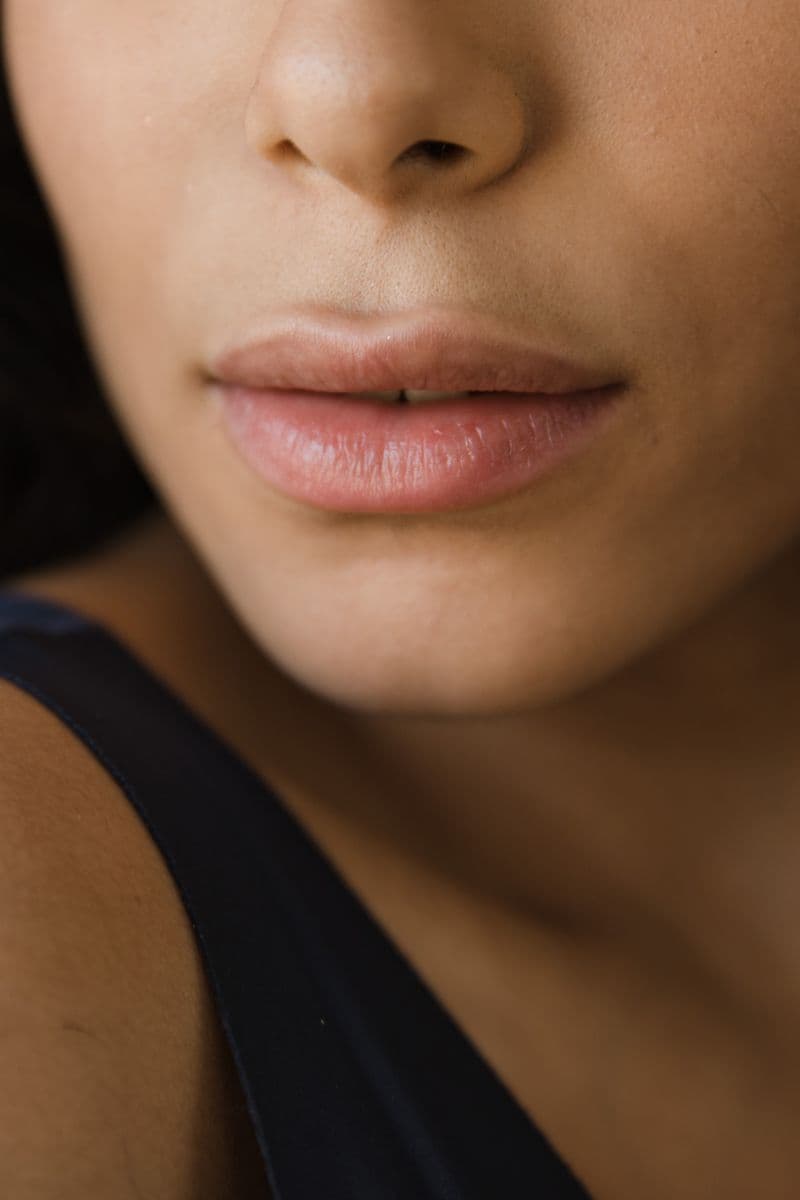
Lip filler swelling looks the worst at 24–48 hours — and that worst-case appearance is not your final result. The lips at peak swelling can appear dramatically fuller, more uneven, and more exaggerated than what you will have when the swelling resolves. Understanding each stage of the swelling timeline prevents the panic that leads patients to call their injectors convinced something has gone wrong, when they are simply experiencing normal, expected healing.
Why Lip Filler Causes More Swelling Than Other Filler Areas
The lips swell more dramatically than cheeks, temples, or jawline for two anatomical reasons:
Vascularity: The superior and inferior labial arteries — branches of the facial artery — run through the lip tissue in a dense network. The injection process disrupts small vessels, triggering a significant local inflammatory response. More blood vessel density means more plasma leaks into the tissue, and more plasma accumulation means more swelling.
Tissue laxity: Lip tissue is looser and more distensible than facial skin. It can accommodate large volumes of interstitial fluid without the pressure that stiffer facial tissue creates. The lips swell more readily and more visibly because they can.
Both factors also explain why bruising is more common in the lips than in other filler areas — and why cold compresses and elevation are more effective here than at other injection sites.
The Swelling Timeline: Day by Day
Day 0 — Treatment day (hours 0–12)
Swelling begins within minutes of injection and builds progressively throughout the day. In the first hour, small injection bumps are visible at each needle entry point. By hour 3–6, general lip swelling has set in.
What you see: Lips noticeably larger than baseline. Both upper and lower lips puffy. Injection sites may appear as small raised bumps. Possible early bruising at needle sites (blue-purple spots, typically 1–3mm). Lips feel tender, tight, and warm.
What is happening: Histamine release from mast cells causes local vasodilation. Plasma leaks from dilated capillaries into the lip tissue. The filler itself adds volume on top of the inflammatory fluid accumulation.
Is this my final result? No. The volume you see now includes both the filler and the inflammatory fluid. The filler is a fraction of what you are seeing.
Aftercare day 0:
- Cold compress (wrapped in cloth) for 10 minutes on, 10 minutes off for the first 4–6 hours
- Keep head elevated; do not sleep face-down
- Avoid alcohol, heat, exercise, spicy and salty food
- No kissing, straws, or prolonged lip pursing
- Drink through open sips; avoid pressing anything against the lips
Day 1 — Peak swelling (24 hours)
Swelling reaches its maximum at approximately 24 hours post-injection. The lips look their largest and most "overdone" at this point. First-time lip filler patients almost universally have a strong reaction to their appearance at day 1 — this is the stage where most panic calls to clinics occur.
What you see: Maximum lip volume. Possible asymmetry — one side of the upper or lower lip may be more swollen. The vermilion border may appear blurred or overfilled. Bruising becomes visible as blood from disrupted vessels works to the surface. Lips feel puffy, heavy, and tender.
The most important thing to know at day 1: This is not your result. You are looking at swelling. The final appearance will be significantly smaller and more natural.
Aftercare day 1:
- Continue cold compresses if comfortable
- Apply arnica gel to bruised areas (not directly on injection sites)
- Sleep with head elevated — this reduces overnight fluid accumulation
- Low-sodium diet to reduce water retention
- No exercise; avoid heat
Days 2–3 — First visible improvement
The first meaningful reduction in swelling typically occurs between days 2 and 3. Patients who were alarmed at day 1 often feel significantly better at day 3 as the lips begin to look more proportionate.
What you see: 30–50% reduction in swelling from day 1 peak. The lips look notably more normal, though still larger than the final result. Bruising is at its most visible — colors range from dark purple to blue-green. The vermilion border becomes more defined as the diffuse puffiness reduces. Asymmetry usually improves as swelling resolves more evenly.
What is happening: The inflammatory response is past its peak. The body's lymphatic system begins clearing the inflammatory fluid. The filler continues integrating with surrounding hyaluronic acid tissue.
Aftercare days 2–3:
- Light exercise (gentle walking) is now permitted
- Arnica continues for bruising
- Low-sodium diet still beneficial
- Makeup on lips is now appropriate (gentle application, remove carefully)
- Avoid vigorous exercise and saunas for one more day
Days 4–5 — Significant resolution
By days 4–5, most patients feel comfortable with their appearance. The lips look noticeably more settled — still slightly larger than the final result, but the dramatic swelling of days 1–2 is gone.
What you see: 60–70% of swelling resolved. Lips look close to — but not yet at — the final result. Bruising transitioning from purple-blue to yellow-green as haemoglobin breaks down. Tenderness largely resolved; normal sensation returning. Asymmetry (if any remains) is minor.
What you can resume by day 5:
- Full exercise program including vigorous cardio and weight training — see our lip filler exercise guide for specific timing
- Hot yoga and saunas
- Kissing (gentle)
- All normal lip activities
Days 6–7 — Near-final appearance
By the end of the first week, most patients have 80–90% of swelling resolved. The lips look close to the final result. First-time patients often compare their day-7 appearance favorably to what they imagined — the swelling-driven "overfilled" look of days 1–2 has given way to a natural, proportionate enhancement.
What you see: Lips near their final size and shape. Minor residual swelling may still be present, particularly at the vermilion border. Bruising is yellow and fading. Lips feel normal and natural.
What is still happening: The filler is continuing its integration process — fully binding with the surrounding tissue matrix. The final stiffness and behavior of the filler is still settling.
Day 14 — Final result
At 2 weeks, all swelling has resolved and the filler has fully integrated. This is when you can accurately assess:
- Volume: Is the amount of enhancement what you wanted?
- Shape: Is the Cupid's bow, lip border, and upper-to-lower ratio what you discussed?
- Symmetry: Are both sides even? (Minor natural asymmetry is normal; significant asymmetry warrants a provider review)
- Texture: Do you feel any lumps or firm areas? Small palpable lumps are normal and usually resolve by week 4; visible lumps at day 14 should be assessed by your provider
If you are happy with the result: plan your next appointment for 6–9 months, when the filler begins to partially metabolize.
If you have concerns at day 14: contact your provider for a review. This is the appropriate time for touch-up injections if additional volume or correction is needed.
What Asymmetry at Different Stages Means
| Stage | Asymmetry likely means |
|---|---|
| Day 1–2 | Uneven swelling — normal, does not reflect filler placement |
| Day 3–5 | Still mostly swelling; reassess at day 7 |
| Day 7 | Likely resolving; contact provider if significant and persistent |
| Day 14 | Actual filler distribution — contact provider for assessment |
Do not request a touch-up before day 14. Injecting additional filler into swollen lips adds volume on top of existing swelling, making the final result unpredictable. All experienced providers will ask you to wait 2 weeks.
Swelling vs. Complication: What Requires Immediate Contact
Normal — no action needed:
- Swelling peaking at 24–48 hours and steadily reducing
- Bruising appearing in the first 24–48 hours and resolving over 7–10 days
- Tenderness lasting 2–5 days
- Minor asymmetry resolving by day 5–7
- Small, palpable (not visible) lumps in the first 2 weeks
Contact your provider promptly:
- Any white or pale patches of skin at or near injection sites in the first hours — this may indicate vascular compression requiring immediate intervention with hyaluronidase
- Swelling that is still increasing after 48 hours (should be reducing, not growing)
- One-sided swelling dramatically worse than the other side after day 3 (possible unilateral vascular issue)
- Skin that appears dusky, mottled, or blue in the hours after injection
Seek emergency care immediately:
- Significant blanching (white skin) at injection sites with pain — possible vascular occlusion
Vascular occlusion from lip filler is rare but serious. It occurs when filler enters or compresses a blood vessel, cutting off blood supply to the surrounding tissue. Symptoms — blanching, severe pain, skin color changes — appear within minutes to hours of injection. Every competent injector carries hyaluronidase (the enzyme that dissolves HA filler) for this emergency. Contact your provider immediately if you see these signs.
Managing the Swelling Window Practically
Take photos daily. Patients who document their healing progress handle the swelling stages far better than those who don't. The visual progression from day 1 to day 7 to day 14 is usually reassuring when you can see it as a trajectory rather than a static alarming image.
Schedule your appointment on a Thursday or Friday. The first 48 hours — the most dramatic swelling — fall over a weekend, giving you time at home before returning to work or social commitments on Monday.
Tell your injector about upcoming events. Significant events within 2 weeks of your planned appointment are a reason to reschedule. Lip filler at day 5 for a job interview or wedding is not ideal. Give yourself at least 2 weeks between injection and any occasion where your appearance significantly matters.
Read the makeup guide. For specific guidance on when you can wear lipstick, lip liner, and lip gloss during recovery — see our lip filler makeup aftercare guide.
Every lip filler patient benefits from written documentation of the swelling timeline — what to expect each day, what is normal versus what warrants contact, and when the final result should be assessed. Related guides: when can you wear lipstick after lip filler · how long after lip filler can you exercise · dermal fillers aftercare
AftercareGen generates professional, clinic-branded lip filler aftercare sheets that include the day-by-day swelling guide, makeup restrictions, and exercise timing, in under a minute.
Stop photocopying aftercare sheets
Generate Lip Filler aftercare instructions branded with your clinic name in under 60 seconds. 3 free sheets per day — no credit card.
Generate your first sheet freeGet the free aftercare template pack
Generators for all 13 aesthetic procedures plus practical guides on running aftercare in your clinic. Sent once — no spam, ever.
Frequently asked questions
About the author
Dr. Megan Cole, RN, BSN
Aesthetic Nurse Practitioner
Registered Nurse with 12+ years in medical aesthetics. Certified injector (AAFE) specializing in neurotoxins and soft-tissue fillers. Clinical educator for aesthetic nursing programs.
View profile