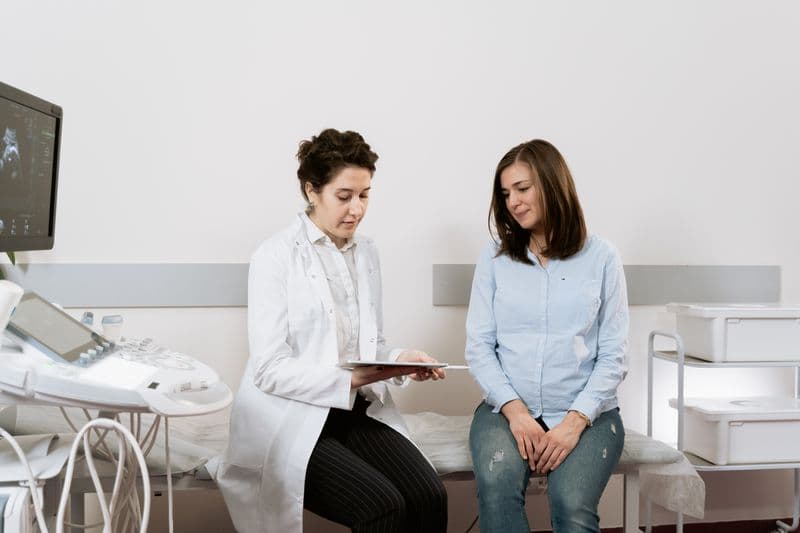
The short answer: no, you should not get Botox while pregnant. This is the consensus position of every major medical body that has addressed the question, including the American College of Obstetricians and Gynecologists, the British Journal of Dermatology, and the product prescribing information for all commercially available botulinum toxin products.
The reason is not a confirmed harm — it is the absence of confirmed safety. Here is what the evidence actually says, what happens in the common scenario of accidental exposure, and what you can safely do for your skin during pregnancy.
Why Botox Is Not Recommended During Pregnancy
The regulatory classification
Botox (botulinum toxin type A, manufactured by Allergan/AbbVie) carries an FDA Pregnancy Category C classification. This means:
- No adequate, well-controlled studies have been conducted in pregnant humans
- Animal studies have shown adverse effects on the fetus at high doses
- The potential benefits may justify use in some circumstances — but those circumstances are medical (therapeutic spasticity, migraine, hyperhidrosis with severe impact) not cosmetic
The "Category C" label is often misread as "probably fine." It is not. It means the safety profile is insufficiently characterized in humans to make a confident recommendation, and in the context of a cosmetic (non-essential) procedure, the precautionary principle applies clearly.
The mechanism of theoretical concern
Botulinum toxin works by cleaving SNAP-25, a protein necessary for acetylcholine release at neuromuscular junctions. When injected intramuscularly at cosmetic doses, the toxin is thought to act locally and not circulate systemically in clinically meaningful concentrations.
However, the placental barrier, fetal neuromuscular development, and the potential for even trace systemic botulinum toxin to affect the developing nervous system are not fully characterized. Fetal motor neurons are actively developing throughout pregnancy, and any factor that interferes with neuromuscular signaling — even transiently — could theoretically affect development.
This mechanism is speculative at cosmetic doses. But speculative harm + non-essential procedure = recommendation against use.
Animal study evidence
Studies in pregnant animals (mice and rats) administered botulinum toxin at doses much higher than cosmetic human use have shown:
- Reduced fetal body weight
- Skeletal abnormalities at very high doses
- Maternal toxicity at doses that exceeded therapeutic ranges
These findings are not directly applicable to human cosmetic use — the doses are far higher than what any cosmetic patient receives. But they are sufficient to justify the precautionary classification.
The human data gap
There are no randomized controlled trials of Botox in pregnant humans — and there will not be, for obvious ethical reasons. The available human data consists of:
-
Case reports and case series of accidental exposure (patients who received Botox before realizing they were pregnant). These consistently show no adverse fetal outcomes attributed to Botox, but the sample sizes are small and uncontrolled.
-
Registry data from patients using therapeutic Botox during pregnancy (for conditions like cervical dystonia where the benefit-risk calculation is different). These data are also reassuring but not sufficient to establish safety.
-
Post-marketing surveillance data, which has not flagged a signal for fetal harm from cosmetic Botox exposure.
The picture that emerges is: the risk of harm from cosmetic Botox during pregnancy is likely low, and the available data is not alarming. But "likely low risk" is not "no risk," and that distinction matters when a developing fetus is involved and the benefit is cosmetic.
If You Already Got Botox Before Knowing You Were Pregnant
This is a genuinely common scenario. Many patients book Botox appointments weeks in advance. Pregnancy may not be confirmed until 4–8 weeks in. You may have received Botox at 3–5 weeks gestation before a pregnancy was detectable.
What you should do:
- Tell your obstetrician at your next appointment. Include the approximate date of the injection, the area treated, and the approximate number of units (your clinic should have a record). This goes into your medical history.
- Do not panic. The case report data on this exact scenario — accidental first-trimester Botox exposure — is consistently reassuring. No signal of harm has emerged from these cases.
- Do not get additional Botox. Now that you know you are pregnant, the precautionary recommendation applies going forward.
Botox While Breastfeeding: The Same Conclusion
The breastfeeding question gets a separate answer because the mechanism of concern differs. The question is not about placental transfer but about whether botulinum toxin passes into breast milk.
What we know: There is essentially no published data on botulinum toxin levels in human breast milk after cosmetic injection. The toxin's large molecular size (150 kDa for the core toxin, larger for the full complex) makes passive diffusion into milk theoretically unlikely. Animal studies have not shown meaningful milk transfer at therapeutic doses.
The recommendation anyway: Avoid Botox while breastfeeding. The reasoning is precautionary — the absence of data on milk transfer is not proof of absence. The non-essential nature of cosmetic Botox means the benefit-risk calculation consistently favors waiting.
Most practitioners recommend waiting until you have fully weaned before resuming.
Safe Alternatives During Pregnancy
Pregnancy does not mean abandoning all skincare. Many treatments and products are safe and can help address the skin changes that pregnancy brings — hyperpigmentation (the "mask of pregnancy," or melasma), increased oiliness, acne, and dehydration.
Safe topical ingredients
| Ingredient | Safe in pregnancy? | Notes |
|---|---|---|
| Hyaluronic acid (topical) | Yes | Safe at all concentrations |
| Niacinamide | Yes (low concentration) | Up to 5% considered safe |
| Vitamin C (L-ascorbic acid) | Yes (moderate concentration) | Safe topically at cosmetic concentrations |
| Glycerin, ceramides | Yes | Barrier support — safe and beneficial |
| Azelaic acid | Yes | Safe for melasma and acne during pregnancy |
| Zinc oxide (SPF) | Yes | Mineral SPF is the preferred option during pregnancy |
| Benzoyl peroxide | Limited use — low concentration only | 2.5–5% applied to small areas considered low risk; avoid large areas |
Ingredients to avoid during pregnancy
| Ingredient | Why to avoid |
|---|---|
| Retinol / tretinoin / retinoids | Systemic retinoids are teratogenic; topical retinoids are avoided precautionarily |
| Hydroquinone | High systemic absorption; avoid during pregnancy |
| Chemical sunscreens (oxybenzone, avobenzone) | Some data on hormonal disruption; switch to mineral SPF |
| Salicylic acid (high concentration) | Aspirin-family compound; low-percentage face washes are considered acceptable by some, but avoid leave-on high-concentration products |
| Formaldehyde-releasing preservatives | Found in some nail products and hair treatments |
Professional treatments that are generally safe
- Gentle, non-exfoliating facials: Cleansing, hydration, and manual massage with safe products. Avoid chemical exfoliants, AHAs, BHAs, and enzyme peels.
- Azelaic acid treatments: This acid is one of the few prescription-grade options considered safe for melasma during pregnancy.
- Gentle LED light therapy (low-intensity): Red and near-infrared LED has no evidence of harm and may support skin healing.
Professional treatments to avoid during pregnancy
- Botox and all injectables (fillers, PRP, Sculptra)
- Chemical peels (especially medium and deep)
- Laser and IPL treatments
- Microneedling
- Spray tans (dihydroxyacetone absorption concern in the first trimester especially)
- High-intensity LED or light-based treatments
When to Resume After Pregnancy
If not breastfeeding: Most practitioners suggest waiting 3–6 months postpartum before resuming Botox. Postpartum hormone fluctuations — particularly in estrogen and prolactin — affect skin behavior and may alter how Botox distributes and how long it lasts. Waiting for hormonal stabilization produces more predictable results.
If breastfeeding: Wait until fully weaned, then allow 1–2 additional months for prolactin levels to normalize before your first post-pregnancy Botox appointment.
Practical note: The muscle-relaxing effect of Botox may behave somewhat differently in the postpartum period. Share your recent pregnancy with your injector at your return appointment so they can adjust dosing if needed.
The Honest Bottom Line for Patients
The risk of cosmetic Botox during pregnancy is almost certainly low — particularly from accidental first-trimester exposure at cosmetic doses. The data we have is not alarming.
But "almost certainly low risk" is not the standard we apply to elective cosmetic procedures during pregnancy. The standard is: is there confirmed safety data sufficient to justify the benefit? For Botox during pregnancy, the answer is no. The benefit — a smoother forehead or reduced wrinkles — does not clear the bar.
If you are pregnant and want to maintain your appearance, there are safe and effective options. Cosmetic injectables are not among them until after you have weaned.
For practitioners: patients frequently ask about Botox during pregnancy, and the question deserves a considered, evidence-based response rather than a reflexive dismissal. A brief written information sheet on pregnancy and aesthetic treatments — what is safe, what is not, and when to resume — is a useful patient resource that sets you apart as a clinician who takes the question seriously. AftercareGen supports practitioners in creating clear, professional patient communication documents for all major aesthetic procedures.
Stop photocopying aftercare sheets
Generate Botox aftercare instructions branded with your clinic name in under 60 seconds. 3 free sheets per day — no credit card.
Generate your first sheet freeGet the free aftercare template pack
Generators for all 13 aesthetic procedures plus practical guides on running aftercare in your clinic. Sent once — no spam, ever.
Frequently asked questions
About the author
Dr. Megan Cole, RN, BSN
Aesthetic Nurse Practitioner
Registered Nurse with 12+ years in medical aesthetics. Certified injector (AAFE) specializing in neurotoxins and soft-tissue fillers. Clinical educator for aesthetic nursing programs.
View profile