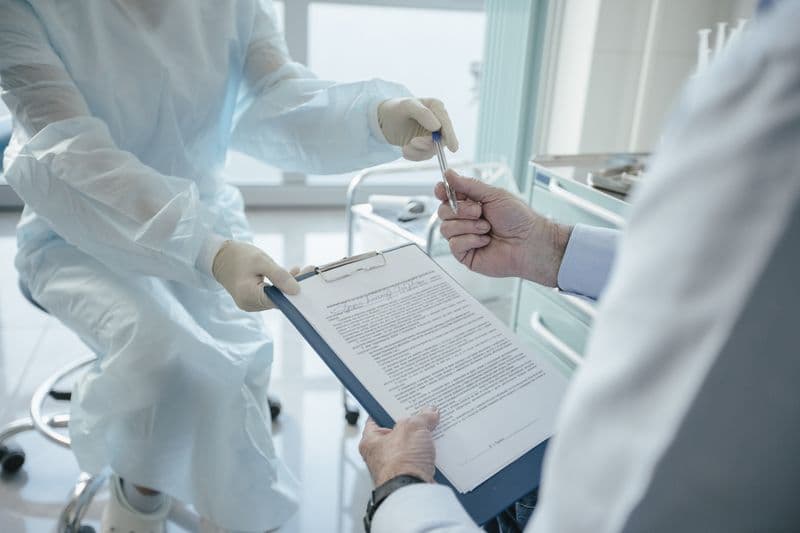
A professionally designed, procedure-specific aftercare sheet is one of the most cost-effective investments an aesthetic clinic can make. It reduces complication rates, lowers follow-up call volume, strengthens your clinical reputation, and — in the event of a patient complaint or claim — provides documented evidence that proper guidance was given.
Yet the majority of clinics still provide generic, one-size-fits-all aftercare sheets that patients receive, glance at, and discard. This guide covers what every aesthetic aftercare document should contain, organized by procedure category, and why each element earns its place on the page.
Why Aftercare Sheets Matter More Than Clinics Assume
The clinical outcomes of aesthetic procedures are not determined solely in the treatment room. A significant portion of the final result — and of the complication rate — is determined by what the patient does in the first 24–72 hours after leaving your clinic.
The evidence for this is not abstract:
- Botox ptosis (eyelid drooping) is associated with rubbing the injected area and certain exercise behaviors in the first hours post-injection. A patient who was told not to touch their face or exercise is less likely to do either.
- Post-inflammatory hyperpigmentation after chemical peels and microneedling is directly linked to UV exposure during healing. A patient who was clearly told "SPF 50, every morning, for 30 days" is more likely to comply than one who received a vague "avoid sun" instruction.
- Infection after lip filler is associated with applying cosmetics too soon and with contaminating healing injection sites. Clear timing guidance prevents this.
- Microblading fallout and patchiness is more prevalent in patients who pick the healing scabs. Patients who understand why they should not pick — and what happens if they do — are significantly more compliant.
The pattern is consistent across procedures: informed patients have better outcomes. The mechanism is simple — they make better decisions during their recovery because they have better information.
What Every Aftercare Sheet Should Include
Regardless of procedure, every clinical aftercare document should contain these seven elements:
1. Patient identification and treatment details
- Patient name
- Date of treatment
- Procedure performed (specific, not generic — "lip augmentation with Juvederm Volbella, 1.0 mL" not "lip filler")
- Area treated
- Provider name and credentials
- Clinic name, address, phone number, and email
This information serves two purposes: it makes the document feel relevant to this specific patient's treatment (increasing compliance), and it creates a documented record of what was advised and when.
2. What is normal — with a timeline
Patients who are not told what to expect will Google it. What they find may be alarmist, inaccurate, or simply not applicable to their specific treatment. Your aftercare sheet should pre-empt this by providing a clear, honest day-by-day guide to normal recovery.
For injectables (Botox, lip filler, dermal fillers):
- Day 0: swelling, redness, possible bruising at injection sites — normal
- Days 1–2: peak swelling, bruising may become more visible — normal
- Days 3–5: swelling resolving — result becoming visible
- Day 14: assess final result; contact clinic if concerned about asymmetry
For permanent makeup (microblading, lip blush):
- Days 1–3: dark, swollen, potentially alarming appearance — this is NOT the final result
- Days 4–7: peeling phase — do not pick
- Weeks 2–3: ghosting phase — color appears to fade — this is normal
- Weeks 4–6: final result visible — book touch-up if needed
For resurfacing (microneedling, chemical peels):
- Hours 0–24: redness, warmth, sensitivity — normal
- Days 2–5: peeling begins — do not pick
- Days 7–10: surface healed; SPF critical; avoid actives until cleared
The specific content varies, but the format — a timeline — is the most effective way to reduce panic calls during normal healing.
3. Clear do's and don'ts — with timeframes
Vague instructions ("avoid sun," "don't exercise") are less effective than specific ones ("apply SPF 50 every morning for 4 weeks"; "no gym for 48 hours; gentle walking is fine after 6 hours").
Specificity matters because patients in recovery face real decisions: Can I go to a yoga class tomorrow morning? Can I wear my usual foundation tonight? What counts as "vigorous exercise"? A sheet that answers these questions directly is more useful than one that requires interpretation.
Format example:
First 24 hours:
- DO: Apply Aquaphor as directed, sleep with head elevated, drink plenty of water
- DO NOT: Exercise, apply makeup, touch the treated area, drink alcohol, use retinol
Days 2–7:
- DO: Apply SPF 50 every morning, use gentle fragrance-free moisturizer, take photos to track healing
- DO NOT: Pick any peeling skin, use AHAs or retinol, book other facial treatments
4. Warning signs — clearly highlighted
This is the most medically important section, and it must be visually distinct from the rest of the document. Bold text, a border, or a highlighted box ensures it is noticed even by patients who skim the rest.
Generic warning signs applicable to most aesthetic procedures:
- Swelling that worsens rather than improves after 48 hours
- Skin that is hot, red, and painful (signs of infection)
- Fever or systemic symptoms
- Allergic reaction signs: widespread rash, hives, difficulty breathing
Procedure-specific warning signs:
- Lip and facial filler: Blanching (white patches) of skin at injection sites — seek immediate care (possible vascular compromise)
- Botox: Ptosis (eyelid drooping) or vision changes — contact provider
- Chemical peel / TCA: Blistering beyond expected peeling — contact provider
- Microblading / lip blush: Signs of infection at healing tattoo sites — contact provider
Emergency contacts should be explicit: "If you experience difficulty breathing or severe allergic symptoms, call 911 immediately. For non-emergency concerns, contact [clinic phone] during business hours."
5. Skincare guidance — specific product types, not brand names
Avoid recommending specific brand names that may not be available to all patients or may change over time. Instead, describe the product category:
- "A gentle, fragrance-free, sulfate-free cleanser (examples: Vanicream Gentle Face Wash, CeraVe Hydrating Cleanser)"
- "A fragrance-free, non-comedogenic moisturizer (examples: CeraVe Moisturizing Cream, Cetaphil Moisturizing Cream)"
- "A mineral sunscreen SPF 50 containing zinc oxide or titanium dioxide"
For high-value procedure types (deep chemical peels, laser resurfacing), consider including a small kit of provider-recommended products. Patient compliance with prescribed products is significantly higher than with generic instructions.
6. Activity and lifestyle guidance
Cover these four categories, with specific timeframes:
Exercise: Specify by type (gentle walking, cardio, weight training, hot yoga, contact sports) with clearance timeframes for each. "Avoid vigorous exercise" is vague. "No gym or running for 48 hours; gentle walking is fine after 6 hours" is actionable.
Sun exposure: How long to avoid direct sun, what SPF factor is required, and whether chemical sunscreens are acceptable (relevant for post-procedure skin where physical filters are preferred).
Alcohol: Most injectables recommend avoiding alcohol for 24 hours due to its vasodilating and blood-thinning effects on bruising and swelling.
Diet and heat: Relevant for lip filler and permanent makeup — spicy food, hot beverages, and saunas are all vasodilatory and worsen swelling. Specify avoidance periods.
7. Follow-up appointment and contact information
Every sheet should close with:
- The date and time of the patient's follow-up appointment (if applicable)
- A clear statement that patients are welcome to call with questions
- The clinic's phone number, prominently placed
- Out-of-hours guidance (who to contact if a concern arises on a Saturday evening)
Patients who are told "call us with any questions" — and who see a phone number prominently displayed — are dramatically less likely to turn to unreliable internet sources or present to an emergency room for concerns your clinic could address in a 2-minute call.
The Problem With Generic Aftercare Sheets
Many clinics use a single aftercare sheet for all injectable treatments, or a generic "skincare procedure" sheet that does not differentiate between a 15-minute microneedling session and a full-face TCA peel. These documents fail for several reasons:
They signal that the clinic did not personalize the care. A patient who receives a sheet titled "Post-Treatment Care Instructions" with no procedure name, date, or provider name perceives it as a copy — and is more likely to discard it.
They do not answer the specific questions that arise. A patient who had a lip blush procedure and develops the ghosting phase in week 2 needs information about lip blush specifically. A generic permanent makeup sheet may cover microblading but not lip blush healing nuances.
They fail at the moment of decision. Patients rarely read aftercare sheets thoroughly at the clinic — they read them later, when a specific concern arises. A document that directly addresses that concern keeps the patient at home rather than in an emergency room, and keeps them calling your clinic rather than a competitor.
The Format That Works
Health literacy research consistently shows the same results: shorter documents are read more thoroughly, bullet points outperform paragraphs, and timeline-based organization outperforms topic-based organization.
Optimal aftercare sheet format:
- One side of one page — if it does not fit, ruthlessly cut. The most important information, formatted concisely, is far more valuable than comprehensive information that is not read.
- Procedure name, patient name, and date at the top — immediately signals personalization
- Timeline format ("First 24 hours:" / "Days 2–5:" / "Day 14:") — most intuitive for patients tracking their recovery
- Bullet points — not paragraphs
- Bold or boxed warning signs — visually separates emergency information from routine guidance
- Large, clear contact information — the clinic phone number should be impossible to miss
- Your clinic logo and branding — patients retain professional-looking documents longer than photocopied generics
Generating Procedure-Specific Aftercare at Scale
Producing individualized, professional aftercare documents for every procedure — Botox, lip filler, microneedling, PRP microneedling, microblading, lip blush, chemical peels, TCA peels, laser hair removal, CoolSculpting, dermaplaning, HydraFacial — is time-consuming when done manually.
The alternative — a single generic sheet — is demonstrably less effective and carries greater liability exposure.
AftercareGen solves this by generating professional, clinic-branded aftercare PDFs for all major aesthetic procedures in under a minute. Enter your clinic name and the procedure performed. The generator produces a complete, evidence-based aftercare document formatted for patient readability — with the timeline, do's and don'ts, warning signs, and contact information fields — ready to print or share digitally. Every patient leaves with instructions that are specific to what they had done, professional enough to reflect well on your clinic, and clear enough to actually be followed.
Start generating aftercare sheets for your clinic at aftercare.nimblabs.com/aftercare.
Stop photocopying aftercare sheets
Generate Botox aftercare instructions branded with your clinic name in under 60 seconds. 3 free sheets per day — no credit card.
Generate your first sheet freeGet the free aftercare template pack
Generators for all 13 aesthetic procedures plus practical guides on running aftercare in your clinic. Sent once — no spam, ever.
Frequently asked questions
About the author
Dr. Megan Cole, RN, BSN
Aesthetic Nurse Practitioner
Registered Nurse with 12+ years in medical aesthetics. Certified injector (AAFE) specializing in neurotoxins and soft-tissue fillers. Clinical educator for aesthetic nursing programs.
View profile